Bearded dragons are the most popular lizard pets because of their calm demeanor, love for snuggling up close to their owners, and the fact that they love to be held. Nonetheless, the creatures have a threatening fairytale name that makes most people think they are vicious and dangerous.
Additionally, bearded dragons are reptiles, a class that features some of the most venomous animals, such as snakes.
These are the main reasons why the first question that most people ask when they hear you speaking about bearded dragons is, “are they poisonous.”
One of the most significant concerns for most bearded dragon owners is whether these lizards are poisonous and whether they pose any danger when kept as pets.
This guide will discuss whether bearded dragons are venomous and how they can be dangerous to humans and other animals.
Do Bearded Dragons Have Venom?
For the longest time, bearded dragons were thought to be non-venomous. There was even a time when beardies were considered safe around children. However, as experts delved into further research, they discovered that these lizards are venomous and not a great pet for kids.
After the 2005 research by Australian scientists, it was discovered that bearded dragons feature venomous glands that secret a toxic venom.
However, their venom is mild and is used to paralyze small prey animals in the wild. Although the research established that bearded dragon venom is similar to rattlesnake venom, it’s secreted in minute quantities that aren’t harmful to humans.
Still, bearded dragon’s bite are painful and might give you a minor wound that will need special attention. These venomous lizards will secrete mild venom enough to kill a small wild prey but harmless to humans and larger animals.
Are All Lizards Poisonous?
Traditionally, venom was associated with snakes. According to a report by ABC Science, nearly 2500 of the 3000 snake species around the globe have venom.
As for lizards, not all of them are venomous. Actually, before 2005, only two lizards were considered poisonous; the Mexican Bearded Lizard and Gila monster.
However, the 2005 research discovered a particular category of lizards that hard venom to a certain degree. These include Gila monsters, Iguanas, Komodo dragon, and our gentle friends, bearded dragons which include different species such as eastern bearded dragon, western bearded dragon, and central bearded dragon.
However, what was more intriguing is that the venom found in this family of lizards had some similarities to snake venom. The bearded dragon venom has some genetic similarities with rattlesnake toxin.
What Happens If You Get Bitten By a Bearded Dragon?
Bearded dragons rarely bite their owners since they are docile creatures that avoid confrontation or fierce interaction with humans at all costs. However, like wild animals, beardies can also get aggrieved and agitated and inflict painful bites.
Although beardie’s venom is non-toxic, a bearded dragon bite can cause minor bruising, swelling, and bleeding. The bleeding can be profuse if the lizard takes a hard and long bite.
Although the venom is harmless, it will cause a mild burning sensation and sharp tingling. However, the swelling and burning sensation will disappear, but the wound can get infected.
The bite might not be as painful as that of a pet dog, but you should expect an adult beardie to inflict a more brutal and painful bite than a baby dragon.
If you have prior knowledge of bearded dragons, the thing that would scare you more is not the venom. These creatures carry Salmonella, a bacteria that causes severe gut complications in mammals.
Do Bearded Dragons Have Sharp Teeth?
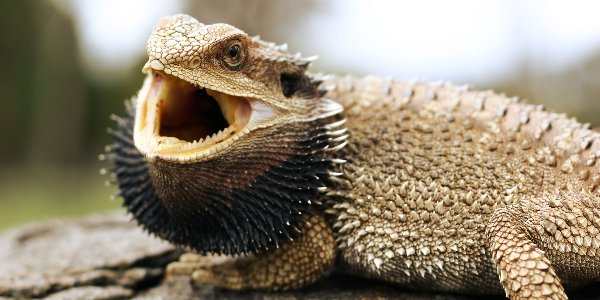
Yes, these reptiles have pretty sharp teeth. While the teeth at the back of their mouths are permanent, the ones at the front can easily fall out and be replaced by new ones. This is why they don’t fear inflicting hard and aggressive bites.
They don’t mind losing the front teeth as they’ll grow a new set. Therefore, once bitten by a bearded dragon, inspect the injured area to ensure that it hasn’t left a tooth in your body.
What to Do Once Bitten By a Bearded Dragon?
If you happen to get bitten by a bearded dragon, there are a few things you should do:
- Don’t move your hand quickly. Although you might be tempted to pull your hand to free yourself, this may make the bite worse. The most prudent thing to do is to try and open the beardie’s jaws and loosen its grip.
- Inspect the bitten area. Check to see if the teeth have pierced the skin and whether blood is oozing from the bitten spot. If there’s blood coming out, move to the next step.
- Clean the wound with an anti-bacterial solution. Even if the bite is superficial and no tissues are exposed, wipe it clean to eliminate bacteria and germs. Dress the wound with a clean bandage if there’s broken skin.
- Consult a doctor. If the wound stays reddish and painful for a long time, don’t hesitate to visit a medical practitioner.
Why and When Can Bearded Dragons Bite?
Typically, bearded dragons have a calm and docile temperament. It’s hard to see the creatures get aggressive since they are always inclined to walk away from confrontations.
Additionally, they get accustomed to petting and regular handling as they stay around humans.
When you threaten or try to be aggressive to a bearded dragon, they react by trying to escape or freeze. However, at times they may lose their cool and attack you. These lizards can launch an attack when:
1. Handled Roughly
Beardies may be friendly, but they don’t like to be handled all the time. If they feel like you are handling them roughly or over petting them, they may react by trying to bite you.
2. Frightened
Like other wild animals, bearded dragons also respond to fear by freezing, taking flight, or fighting. If you do something that scares these scaly friends, they might try to defend themselves by biting you.
3. Startled
Beardies have a third eye that allows them to detect anything coming from above their head. If you suddenly pass something above their head or startle them as they mind their business, they will retaliate by launching an attack. Therefore, avoid grabbing a bearded dragon abruptly, especially from the top of its head.
4. Mishandled
Anyone who wants to handle a bearded dragon should know how it’s done. Pulling the bearded dragon tail, flipping it over, or holding it too tightly can make it uncomfortable. The lizard will bite your hand to compel you to let it loose.
5. Accidental Bites
If you are used to feeding your bearded dragon using your hands, it might bite you unintentionally. It is easy for the beardies to confuse your hand with food.
Signs That a Bearded Dragon Is About to Launch an Attack
Even though bearded dragon bites are non-toxic, it’s always prudent to avoid the bites at all costs since they might create a path for infections.
However, to evade bites from beardies, you must recognize the various signs of aggressiveness. Here are the signs you should check out for:
- The bearded dragon has puffed up its throat
- Your beardie starts to produce a hissing sound
- Darkening of the bearded dragon’s chest
- Opening its mouth wide open
If you approach a bearded dragon and notice these signs, please leave it alone. Conversely, if you try to touch it and it escapes, don’t try to catch it forcefully.
If it starts hissing or puffing up its beard when it’s already in your hands, place it back in the tank and let it cool down. Never try to handle a beardie when it’s showing signs of aggression.

Are Bearded Dragons Dangerous to Humans?
Bearded dragon’s venom may not be poisonous or toxic to human beings, but this doesn’t mean you’re entirely safe around these lizards.
Suppose you don’t adhere to hygiene rules such as washing your hands, cleaning their enclosures, handling them safely, and providing the best living conditions. In that case, you can get Salmonella or pinworms.
Bearded Dragons and Salmonella
Most reptiles, including bearded dragons, frogs, turtles, etc., carry the salmonella bacteria and can spread to humans effortlessly. Essentially, beardies have the salmonella bacteria in their gut.
Whenever they poop, they release the bacteria into the environment, contaminating any surface the stool comes into contact with.
You can get Salmonella by touching the bearded dragon or any of the surfaces inside its enclosure. Salmonella causes gastronomical illnesses that can cause death to those with compromised immune systems.
If you have small children and elderly citizens in your household, they’re at a high risk of contracting Salmonella if they handle beardies or touch contaminated surfaces.
Luckily, bearded dragon owners can prevent salmonella transmission by following basic hygiene and personal care rules.
- Wash your hand before and after you handle or touch a bearded dragon. After handling or touching a bearded enclosure, you should clean your hands with soap and lots of water to eliminate germs or bacteria.
- Clean the bearded dragon and its terrarium thoroughly. Salmonella can be found on bearded dragons’ skin, mouth, and physical surfaces. Giving the beardie a warm bath, cleaning its enclosure, and disinfecting accessories and décor can help eliminate the bacteria.
- Handle the bearded dragon’s poop with care. Since the beardie’s fecal matter is what carries the salmonella bacteria, you should avoid touching it with bare hands. Furthermore, you should clean the stool immediately after the lizard poops.
- Handle the bearded dragon safely. Bearded dragons owners should try as much as possible to exercise caution and stay safe when handling beardies. You should avoid letting kids interact with beardies without supervision. Also, avoid kissing bearded dragons as they might have salmonella germs on their mouths.
If you suspect that you or a family member has contracted Salmonella, make sure you visit a medical practitioner and get the appropriate treatment. Salmonella can even lead to death, especially in persons with compromised immune systems.
Bearded Dragons and Pinworms
Besides Salmonella, another danger that bearded dragons pose to human beings is spreading parasites, such as pinworms. Like Salmonella, pinworms are found in the lizard’s poop.
So, to prevent pinworm transmission from beardies to humans, you must follow simple hygiene tips like washing your hands and cleaning the terrarium regularly.
Additionally, since these lizards get the Pinworms from feeding on wild insects or other wild foods, you should feed them with food that comes from reliable sources.
Wild insects can expose your beardies to germs and diseases, which they can, in turn, transmit to you.
Are Bearded Dragons Poisonous to Other Pets Like Cats and Dogs?
Like humans, cats and dogs have more robust immune systems and thus won’t be harmed by the venom released by bearded dragons. However, they too are at risk of contracting Salmonella or getting parasites from bearded dragons.
Therefore, it’s advisable to minimize the interaction between bearded dragons and other household pets. And if you want your lizard to be friends with other household pets, you should ensure that proper sanitation and hygiene are maintained.
Bearded dragon venom is only potent for killing small insects and prey, but it won’t affect cats or dogs. However, you must be cautious when allowing interaction between beardies and other pets since these lizards can pass Salmonella and parasites to your mammalian pets.
Is It True that Venom From Lizards Is Used for Medicinal Purposes?
According to the Molecular & Cellular Proteomics in the 2010 Study Science Journal, venom from lizards like Mexican bearded lizard and Gila monster is being used in medications for diabetes.
The study further confirmed that lizard venom contains three amino acid compounds that may help treat heart disease.
Therefore, as experts delve into in-depth research of lizard venom, the bearded dragon toxins promise to be a treasure trove in the medical world.
While various lizards may have poisonous toxins, they should be protected at all costs since they might become a pivotal part of medical research.
Final Verdict
Bearded dragons make great pets for people who are already synonymous with their unique capabilities, features, and dangers.
However, new pet owners will need to know whether bearded dragons are venomous before they decide whether to bring them to their homes or not.
Bearded dragons may have venom, but it’s only potent for killing insects and small animals. The lizard’s venom is similar to a rattle snake venom.
Still, it is administered in small quantities that won’t harm human beings or any animal more prominent than the bearded dragon.
So, bearded dragons are not poisonous to human beings even though they have venomous glands that release toxins. However, bearded dragons can inflict painful bites and may transmit Salmonella and parasites like pinworms to humans.
For this reason, bearded dragon owners should take care when handling beardies and ensure that they wash their hands and clean bearded dragon enclosures.