Bearded dragons have a solid reputation for being gentle and calm. But what most people don’t know is that these creatures are also inherently playful and curious. They love to explore and watch what’s happening around them. Wild bearded dragons are always on the move, as their survival depends on how active and energetic they are.
These lizards usually carry this energy into captivity since it has been ingrained in them. Just like how they explore in their natural habitat, they also stay active and explore all parts of their enclosure.
However, sometimes beardies may have a certain level of activity that may be extra. It is usual for your beardie to exhibit high energy levels, but sometimes they can become overexcited and hyperactive due to various reasons.
You’ve come to the right place if you have been wondering why your bearded dragon seems hyper. This piece will detail the reasons for hyperactivity in bearded dragons.
What Are the Common Causes of Hyperactivity In Bearded Dragons?
1. Temperature
Optimal temperature is vital for bearded dragons’ health and overall well-being. The temperature inside the enclosure can influence your beardie’s activity level. If the temperature increases beyond the recommended level, it quickens the bearded dragon’s metabolism making it more energetic and hyperactive.
If you notice that your beardie is running up and down or exploring the cage more than usual, you’ll need to check the temperature in the basking area and the other parts.
The basking area should have a temperature range of 88-100°F (31-38°C), while the rest of the tank temperatures should range from 70-75°F (21-24°C). Sudden spike above these levels would cause your bearded dragon to be hyper.

2. Age
Just like younger kids and teens are more energetic and active than adults in humans, young bearded dragons and juveniles are more active than adult lizards.
When beardies are in their youth, they have more vigor, vibrancy, and a knack for enjoyment, exploration, and a general thirst for life. They always seem to be bubbly, excited, and curious.
During the first few years of their lives, bearded dragons have to learn to move and navigate their habitats faster. Any sluggishness or lack of concentration can see various predators turn them into snacks.
They have to find food more quickly and always be alert to fend off predators. However, when these creatures age, they start losing their spark and become more relaxed and lethargic.
3. Lighting
UV light is essential for digestion and calcium absorption. Lack of proper lighting can make your bearded dragon lethargic and weak. Excess brightness in the bearded dragon enclosure can cause your beardies to be hyperactive.
Using lamps that are not rated for reptiles or placing the lights too close to the dragon can cause them to start glass surfing and running up and down trying to escape.
4. The Size of the Tank
The tank size can also influence activity levels in bearded dragons. Just like we get a little antsy when we stay indoors for too long, bearded dragons also feel the urge to get out of the tank and get a breather. It’s highly recommended that you let your lizard stroll around the compound for a few hours to exercise and kill anxiety.
Bearded dragons can get jumpy and more active because the tank is too small. Since these creatures’ original habitat is extensive, they require an enclosure that gives them ample space to play and exercise. If the tank is small, they feel grumpy and stressed. They become hypersensitive and start to glass surf.
If your bearded dragon becomes hyperactive, you should check whether it’s because the enclosure is too small. An adult bearded dragon should stay in a tank measuring between 70 to 120 gallons. You should give your beardie a spacious tank based on its size.
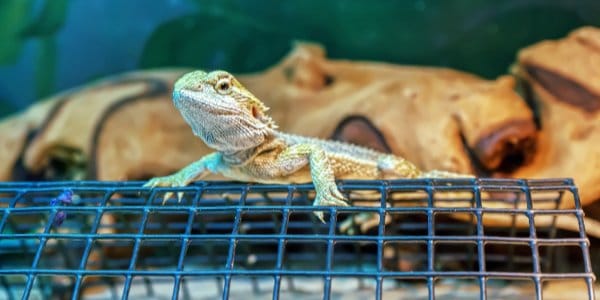
5. Brumation
During winter, bearded dragons go into a period of inactivity in a process known as brumation. When these lizards come out of brumation, they get a excess energy levels that makes them very active.
After a long period of inactivity, bearded dragons’ bodies try to adapt to the new schedule and keep up with the new lifestyle. This is why they become hyper.
6. New Environment
Bringing a new bearded dragon home is all exciting. However, the excitement is only for the owner. Don’t be surprised if the new beardie hides in the tank for the first few days. This is a normal reaction to being in a strange environment.
However, when the bearded dragon feels comfortable and familiarizes itself with the new home, it will get excited and start to explore the enclosure.
Sometimes the activity level can be heightened to the extent that the bearded dragon will begin to run all over, climb on the furniture, or even try to climb over the glass wall. This is a normal reaction that shouldn’t raise any concern.
7. Fear
Due to their sensitive nature, bearded dragons are easily scared. When these creatures are frightened, they often run around the terrarium in panic mode. If your bearded dragon seems anxious as it runs and circumnavigates its enclosure, it might have been startled by something.
Some of the things that might scare your bearded dragon include the presence of other bigger pets such as cats and dogs near its tank, loud noise, or even seeing something new in its enclosure.
It could even be something like wearing a new perfume, sneaking your hand inside the tank, or changing the position of the terrarium.
Don’t be surprise if you see your bearded dragon digging in the tank as it can be a sign of fear.

8. Hormones
Hormonal changes can also cause hyperactivity. Male and female beardies can experience hormonal changes that might make them more active. Reproductive hormones can make female beardies more vibrant and overly active during ovulation.
Male bearded dragons experience hormone changes during the mating season. They might become hyper to attract females or compete for mates with other males.
Conclusion
Bearded dragons boast of being the best animals to keep as pets. They might be calm and docile, but they become bubbly, energetic, and active when given proper care.
However, sometimes these lizards can become hyperactive, making bearded dragon owners wonder whether they are ok. Although typical aspects can make beardies too active, sometimes it might result from flaws inside or outside the enclosure.
As a reptile owners, its important to know the different bearded dragon’s behavior and what it might mean.
Some factors that lead to hyperactivity include high temperature and lighting, hormonal changes, new environment, age, small tank, post brumation, and fear. If your bearded dragon seems overly active, check out whether it’s caused by one of the things in this piece.