Snakes are found in a wide range of habitats in multiple areas of the world, from swamps to open fields to deserts. To the general public, each limbless reptile may look the same. However, every snake species is different, and being able to identify the reptiles is a critical tool when you encounter one on a hiking trail or in your backyard.
Bull and Rat Snakes are constrictors, while Rattlesnakes are venomous. Rattlesnakes are shorter than 5 feet (1.5 m), while Bull Snakes reach 6 feet (1.8 m) and Rat Snakes reach 7 feet (2.1 m). Bull and Rat snakes mimic the sound of a Rattlesnale’s rattles by vibrating their tails against vegetation.
As these three snake species live in overlapping regions, you’ll want to ensure that you can tell them apart to prevent any unpleasant encounters for you or the reptiles.
Key Differences Between Bull Snakes, Rat Snakes, and Rattlesnakes
While Bull Snakes, Rat Snakes, and Rattlesnakes may appear to be the same animal to an untrained eye, there are many ways to tell the snakes apart.
Let’s start by summarizing the most important aspects of the three species:
| Bull Snake | Rat Snake | Rattlesnake | |
| Length | 4 – 6 ft (1.2 – 1.8 m)Record: 8 ft (2.4 m) | 4 – 7 ft (1.2 – 2.1 m)Record: 9 ft (2.7 m) | 3 – 5 ft (0.9 – 1.5m)Record: 8.4 ft (2.6 m) |
| Coloration and Pattern | Light yellows, browns, and oranges;‘Splot’ pattern on back | Black back, light brown or gray on belly | Browns, blacks, tans, pale pink, gray, olive;Dimond, stripe, or no pattern |
| Physical Appearance | Pointed, short head, slim head and body, large ‘nose’, lines on upper ‘lip’, circular pupils, strip from eye to mouth on each side | Slim head and body, circular pupils, shiny backs | Triangular head wider than body, slit pupils |
| Habitat | North America;Open, sandy areas, prairies, old fields, etc. | North America;Hidden, rocky areas, marches, prairies, swamps, etc. | North and South America;Open, rocky areas, forests, deserts, swamps, etc. |
| Method of Attack | Constriction | Constriction | Venom, ambush |
| Diet | Small rodents, lizards, birds, squirrels, etc. | Small rodents, lizards, squirrels, etc.; chicken eggs | Small rodents, lizards, squirrels, etc. |
| Defensive Actions | Mimic tail rattle, hiss/growl, curl up, bite | Mimic tail rattle, hiss, curl up, strike out | Rattle and raised tail, hiss, curl up, bite |
| Other Distinguishing Characteristics | Aggressive reputation, slow, strong bite, sharp teeth | Good climbers, strong bite, sharp teeth | Good swimmers, facial pits for detecting temperature variations, gain a new rattle on tail after each shed |
After reading through the table, you’ll see that while the three snake species have areas of overlap, such as diet, they also have plenty of differences. Next, we’ll look at each category to compare and contrast each snake in more detail.
Length
The first thing you’ll notice about the average length ranges is that rattlesnakes are on the shorter side, though some species, such as the Eastern Diamondback rattlesnake, can grow rather long.
In general, however, if you are in an area with all three snakes, any snake over 5 feet (1.5 meters) long is unlikely to be a rattlesnake. Rat Snakes can be slightly longer than Bull Snakes.
Coloration and Pattern
An adult snake’s coloration and pattern can be one of the quickest ways to distinguish between species. Take the Bull Snake and Rat Snake. Bulls tend to have pale ‘warm’ colors, such as yellows and oranges, as well as light browns, and the pattern on their back is made up of ‘splots’ instead of pure, circular spots or clear lines.
On the other hand, Rat Snakes have very shiny black backs, with light brown or gray on their bellies.
Due to the large variety of colors they can be, Rattlesnakes can be mistaken for Bull Snakes at first glance. However, Bull Snakes’ colors are more muted and don’t have the clear pattern some rattlesnake species have.
Another thing to remember is that even snakes of the same species may have different colors or patterns between subspecies depending on the area in which they are found.
You’ll want to look up the most common variations in your region to be able to identify the species confidently.
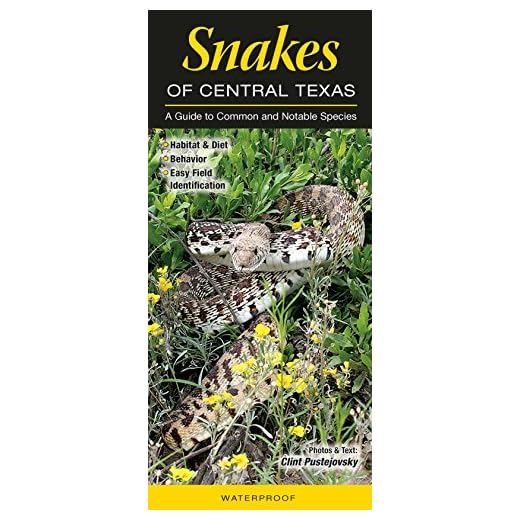
Reptile and snake guide books, such as this Snakes of Central Texas: A Guide to Common & Notable Species by Clint Pustejovsky on Amazon.com, is a handy tool for familiarizing yourself with what local snakes look like.
Can Snakes Change Colors?
You may have noticed that the above paragraph specifies ‘adult’ snake colors and patterns. That is because some snakes may not have the same palette when young. Rat Snakes, for example, are grayer when they are young, and their scales—especially on their back— darken as they grow older.
Color differences are also not restricted to varying with age. Some snakes can darken their scales to help absorb more sunlight when warming up. Others may have some camouflage abilities.
Physical Appearance
While Bull and Rat Snakes are more physically similar to each other than rattlesnakes, with slim heads that fit their equally slim bodies and circular pupils, there are still visible differences between them. Bull snakes have large ‘noses’ for moving dirt as they dig and vertical lines on their upper ‘lip.’
Rattlesnakes have the most distinctive appearance among the three, not in the least due to the name-sake rattle on the end of their tails. Each time a Rattlesnake sheds, a new rattle is added.
Due to their venom glands, these snakes have heads that are triangular and wider than their bodies. In addition, they have vertical, slit pupils and facial pits between their eyes and nostrils for sensing temperature variations in the environment.
Are There Reliable Ways To Tell a Non-Venomous Snake From a Venomous One?
There are a few general rules regarding how to tell if a snake is dangerous from physical appearance alone. Most venomous snakes are similar to rattlesnakes, with slit pupils, broad heads, and facial pits, as well as only having a single row of scales on the underside of their tails.
However, this is not a guaranteed way to tell the difference, as explained here on the McGill Office for Science and Society. The most venomous snake on the planet, the Inland Taipan, looks more like a general non-venomous species, partly because of a lack of facial pits.
There is also a problem with relying on pupil shape for identification. While slit pupils look more menacing and are typically found in venomous species, the shape has more to do with when and how a snake hunts. Check out this article on NewScientist for more details on the study.
Habitat
Rat Snakes, Bull Snakes, and Rattlesnakes can all be found in North America, although Rattlesnakes have a broader range in North America as well as reaching into some areas of South America.
Bull Snakes prefer open, sandy areas, and while they co-exist with Rattlesnakes, the latter are most likely to be found in open, rocky areas. Rattlesnakes also have a wider range of habitats, including forests and swamps alongside deserts and prairies. Rat Snakes, in comparison, are generally hidden rocky areas and marches.
Method of Attack
As constrictors, both Bull and Rat snakes kill their prey by wrapping their long bodies around it and swallowing their catch whole. Rattlesnakes, however, are venomous ambushers, and that venom is strong enough to kill an adult human if not treated.
Rattlesnake Venom
Rattlesnakes don’t always inject their prey with venom when they bite, but when they do, it’s through hollow fangs in their mouth where the venom flows from the venom glands. Most of their venom is made up of hemotoxins, which attack their target’s tissues, organs, and blood. This type of toxin can lead to organ failures and internal bleeding.
The other toxin that Rattlesnakes have are neurotoxins. As the name suggests, this aspect of their venom hits the nervous system, leaving prey paralyzed.
One important thing to remember is that Rattlesnake bites on humans are rare. The snakes themselves aren’t aggressive and will only bite when provoked. However, in the rare case that you are bitten by one, it is critical to get immediate medical attention. This page on UC Davis Health goes over the dos and don’ts after getting bit.
Here are a few of the vitally important things:
- Do NOT put ice on the wound.
- Do NOT suck the venom out.
- Do NOT wash the injury, as leftover venom can be used to identify the species that bit you.
Again, Rattlesnakes will not go out of their way to bite a person. Remembering to be careful, aware of your surroundings, and respectful of any snakes you come across will go a long way in preventing a bite.
Diet
All three species of snakes overlap in their diets, with small mammals, such as rodents, lizards, and birds being their primary prey. Young Bull snakes may go after insects, and Rat Snakes have been known to eat chicken eggs, but overall, their meals are what you would expect of a snake.
The main difference between Bull and Rat Snakes and Rattlesnakes is when they eat. As opposed to the other two species, Rattlesnakes are ambush predators who will do most of their hunting when it’s dark.
Defensive Actions
A Rattlesnake’s tail rattle may seem like a unique warning, but both Bull and Rat snakes can mimic the sound by vibrating their tails against vegetation. While you should immediately leave the area if you hear a rattling sound, there is a visual difference that can tell you if you’re dealing with a real Rattlesnake or not. A Rattlesnake will raise its tail while the other two keep their tails on the ground.
All three snakes will also curl up, hiss, and bite if they feel threatened—Bull and Rat Snakes are both known for having powerful bites. In addition, Bull Snakes, being on the slower side, may raise themselves off the ground to look bigger. Rat Snakes may repeatedly strike out at any threat. While the more aggressive Bull Snake might chase you, Rat and Rattlesnakes will likely leave you alone if you vacate the area.
Other Distinguishing Characteristics
Each type of snake has many characteristics that set it apart from other species. As mentioned above, Bull Snakes tend to be more aggressive, though they can be kept as pets and grow used to being handled.
Rat Snakes are another species kept as pets, and while they can be aggressive as well, they tend to calm down more quickly. These snakes are good climbers, able to scale both trees and buildings.
Rattlesnakes are one of the most easily identifiable species with their tail rattles and can swim. They are most likely to be out hunting at dawn or dusk, though that’s not a strict requirement.
Conclusion
Bull Snakes, Rat Snakes, and Rattlesnakes can be hard to tell apart when you don’t know what to look for.
While Rattlesnake bites are rare, the fear of them can negatively impact other reptiles in the area. Despite being beneficial for pest control—just like Rat Snakes—, Bull Snakes are often killed after being mistaken for a Rattlesnake.
By learning to identify the snakes in your area, you are not only adding to your own knowledge but can also help educate other people on these amazing animals.