Due to their nature and adaptation, leopard geckos’ physiology is adapted for dry conditions and to withstand long spells without water. Their bodies can conserve moisture and avoid the wastage of water. As a leopard gecko owner, chances are that there have been several times when you have asked yourself the question;
Do leopard geckos absorb water through the skin?
Yes, leopard geckos are able to absorb water through their skin. In the wild, these geckos are found in dry and desert conditions. As such, moisture conservation and absorption are crucial for their survival. One of the ways through which they do this is by absorbing moisture through their skin.
Water plays a vital role in most animals, including leopard geckos. It is vital for survival, and it is no wonder that these lizards absorb it through their skin to increase the chances of moisture intake, which is scarce in their natural environment.
What Are the Signs Of Dehydration In a Leopard Gecko?
If your leopard gecko is dehydrated or is not getting enough water, it may exhibit several signs. The most common sign of a dehydrated gecko is panting. Panting happens, especially on a hot day, to cool the body. In the process, they lose a lot of water, which may lead to dehydration.
Besides panting, other dehydration signs to look out for include;
- Wrinkled or dry skin
- Skin loses elasticity
- Constipation and difficult and irregular defecation
- Lethargy
- General weakness
In case you notice these signs, you should rehydrate your gecko immediately. If you are unsure how severe the dehydration is, you should immediately contact your vet. Severe dehydration cases may require administering fluids directly into the body through an injection.
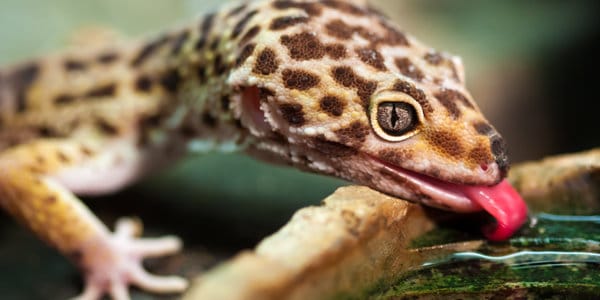
Why Is Absorbing Water Through the Skin Important for a Leopard Gecko?
Absorbing water through the skin is essential for your gecko as it helps your pet remain hydrated. A well-hydrated pet is healthy and is not at risk of dehydration, a common occurrence in most desert reptiles.
Since water is scarce in their natural environment, these pets will hardly find drinking water. If you don’t give them close attention, they may go for days without it, which may put them at risk. On average, a mature leopard gecko can go for three days without water; beyond that, it will be at risk of dehydration.
Apart from remaining hydrated, moisture absorption through the skin will make it easy for your leopard gecko to shed its skin. Well-hydrated skin will easily peel off your gecko’s body, enabling them to grow youthful and better-looking skin. Dehydrated skin, however, will take longer to peel, making it quite uncomfortable for your gecko.
How To Encourage Water Absorption Through the Skin?
Since we now know why it is vital for leopard geckos to absorb water through the skin, it is essential to know the ways through which you can encourage this practice. A lot of moisture in the enclosure is critical for this process.
Here are several ways to increase the moisture content in the vivarium to increase the chances of your leopard gecko absorbing water through its skin.
Use Of a Humidifying Shelter
A humidifying shelter is basically a small hide container with a moist substrate inside the gecko’s enclosure. It is commonly used in habitats where there is low humidity. From time to time, your gecko will walk into the box and cool its skin by absorbing the moisture on the substrate.
You may need to teach your gecko how to use the box as this is an accessory not available in their natural habitat.
Misting
Misting is the process of spraying the gecko and its enclosure with lukewarm water. By making the surrounding of the gecko moist, your gecko can absorb the water on its skin and surrounding. The frequency of misting depends on the moisture content in the air.
On average, spraying 2-3 times a week is sufficient for your gecko. However, you may need to increase the frequency when your gecko is shedding.
Misting the gecko’s environment can also help with rehydration. Your gecko will lick the moist walls from time to time, thus rehydrating in the process. After rehydrating, continue with the practice to avoid dehydration again.
Soaking
Soaking is another commonly applied technique by leopard gecko owners. It means dipping your gecko in water to wet its skin. While the soaking is an effective method, it is discouraged as geckos are not good swimmers.
Therefore, they can easily drown if left in the soaking bowl. If you have to use this method, use a shallow bowl from which your gecko can easily jump out of.
When done safely, one of the advantages of soaking your geckos is that it helps control mite infestation by drowning the mites that cling to the gecko’s skin. Always use lukewarm water, as cold water may lead to hypothermia.
Frequently Asked Questions
Do Geckos Drink Water?
Leopard geckos are primarily found in dry arid areas with little water. They only require small amounts of water to survive as a natural adaptation. Geckos do not ordinarily drink water but usually get it from the food they take. It is good, therefore necessary, to look for moisture-rich insects to feed your gecko.
Check this full guide (Do Leopard Geckos Drink Water?)
Do Leopard Geckos Soak in Water?
Soaking leopard geckos in water is good for them as it helps their skin become hydrated. It is essential when the geckos are shedding their skin, making the process easier. Ideally, when your gecko is shedding its skin, you can soak it between 15 and 20 minutes, 2 or 3 times weekly.
Is Spraying Bad For My Gecko?
Spraying your gecko is one of the ways that you may use to rehydrate your gecko. Always use lukewarm water when spraying your gecko to avoid making it feel cold. How often you mist will depend on the humidity levels in the area; the lower the humidity, the more often you will need to mist.
Conclusion
Leopard geckos can absorb water through the skin. It is an important mechanism that helps them remain hydrated, especially in dry areas.
Introducing moisture on their skin and enclosure increases the chances of them absorbing it through the skin. Some ways to do this include misting, soaking, and using a wet substrate.