Leopard geckos are relatively silent creatures, but they are capable of making a variety of sounds that can be used to express their emotions.
It is fascinating to know that leopard geckos can produce a range of sounds, each expressing a different emotion. They can scream when they are scared or angry, chirp when they are content, click when they are annoyed, squeak when they are happy, and even bark when they are excited. Each sound is distinct and easily recognizable, making it clear how the leopard gecko is feeling at any given moment.
Read on to learn about leopard geckos’ different sounds and their meaning.
Why Do Leopard Geckos Make Noise?
Leopard geckos are capable of a diverse array of vocalizations. A gecko’s sounds can convey various meanings depending on their volume, duration, specific sound, and the context in which they are used.
Geckos can communicate more than most reptiles due to their elastic vocal cords. Most reptiles are mostly or completely silent, but geckos can make various sounds to express their feelings. Since leopard geckos are active at night, they can’t always talk to each other through sight or smell.
The noises from leopard geckos cover a spectrum of communication, ranging from distress calls to alert other lizards of impending danger to territorial warnings and even mating cries. Leopard geckos can produce various sounds, including chirping, squeaking, barking, hissing, and even shrieking and screaming.
In summary, leopard geckos can make noises for the following purposes or reasons:
- To startle or frighten away potential enemies, allowing the gecko to make a hasty getaway
- Male geckos often make noise before they engage in violent conflict over territorial issues, including competition for food, territory, and females.
- To sound an alarm and alert nearby geckos of potential danger
- To find a mate and pursue courtship relationships
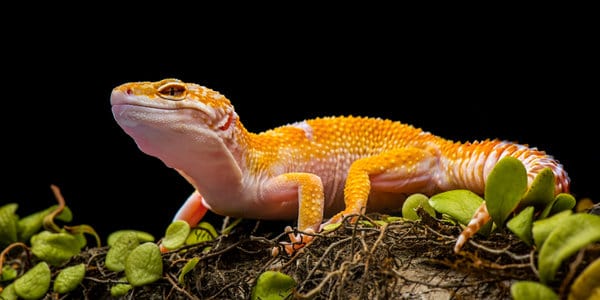
Why Do Leopard Geckos Scream?
Screaming in leopard geckos is a mystery that seems impossible and improbable even to consider. Yet, it is undeniably true that geckos can emit a scream when threatened. If your lizard starts screaming, it’ll be pretty obvious.
Inherently, leopard geckos are defensive animals. However, having evolved in a setting where they constantly monitor their surroundings for predators, these reptiles have also developed an offensive repertoire.
Leopard geckos make sounds like screams or shrieks when they feel scared or threatened. Most of the time, leopard geckos scream to startle or scare something or someone they think is trying to hurt them.
Other Common Leopard Gecko Noises You Should Watch Out For
Chirping
Chirping is the most typical sound you’ll likely hear from your leopard gecko. It’s good or bad news if you hear your lizard making a chirping noise. This sound is associated with happiness, pleasure, and overall satisfaction. However, it can still be a response to stress, anxiety, and discomfort.
Chirping is also a means for lizards to show they are unhappy or try to attract female lizards. When male lizards fight, they sometimes make a squeaking sound.
Again, they may chirp in protest if you handle them roughly. Additionally, these creatures react by producing a chirping sound that surprises them or when they are hungry.
Barking
On rare occasions, leopard geckos may make a short, low-pitched “creaking” or “barking” sound. Most of the time, they do this when they are scared, uncomfortable, or not in the mood to be touched. They may also do this to vent their rage and to warn off other geckos.
Be wary if your gecko keeps barking at you or another lizard with its mouth wide open. It might be preparing to bite you. However, remember that a leopard gecko’s bark will seem more like a chirp than a dog’s bark.
Clicking
Clicking is another common sound made by leopard geckos and is associated with geckos that feel threatened. Usually, these scaly friends react by making this noise when handled carelessly or roughly.
Many leopard gecko owners have also confessed to having heard their pets click when trying to introduce them to other geckos. Therefore, this noise may also be a response to anxiety and fear.
Hissing
This almost inaudible hissing or sighing sound is mostly used as a warning, usually to other geckos or people. This is often how leopard geckos settle fights with each other when they are in the wild. Hissing helps geckos keep tensions at bay and is a great way to avoid violent confrontations and brawls.
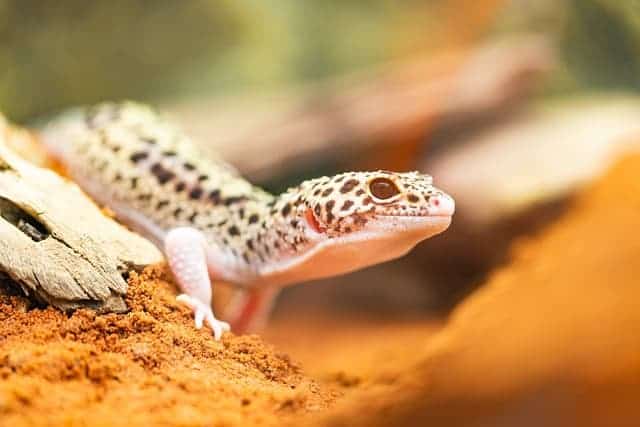
Do Leopard Geckos Make Noise at Night?
Given that the leopard geckos are nocturnal species, you may notice that they remain quite active during the night. They use this time to seek out potential mates, hunt for food, and hide from their daytime predators.
Aside from the failed attempts to scale the glass walls, you’ll also notice that they make a lot of noises that may likely keep you awake at night.
If you’ve never owned a gecko, you may be perplexed as to why your new companion is making so much noise instead of resting peacefully. But as we have seen, your pet may be more vocal at night for a variety of reasons, including stress, a threat from predators, hunger, or even poor living conditions
Make sure to give them a pleasant living environment, and you will sleep peacefully without any noise.