Eco Earth is a loose substrate commonly used in most pet enclosures. It is pretty popular, and most pet owners are familiar with it. However, is it a good substrate choice for a leopard gecko?
Is Eco earth safe for leopard geckos?
Although affordable and natural-looking, Eco Earth is not suitable for leopard geckos. It has some drawbacks, such as hurting the lizard’s skin, risk of impaction, and potential risk of impaction.
The key reason why most people consider eco-earth for leopard geckos is that it is easily digestible and looks natural, and does well with most, if not all, humid hides. Another advantage of eco-earth is that it absorbs odor in the enclosure keeping it smelling fresh.
However, the disadvantages of eco earth outweigh its benefits. In this article, we will explore why you should reconsider using Eco earth as a substrate for your leopard geckos and better alternatives.
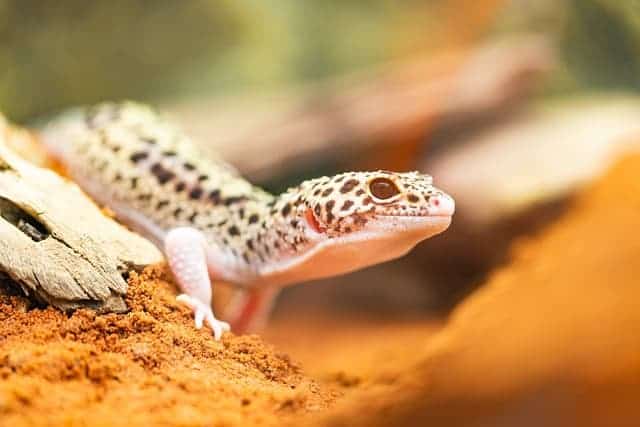
4 Challenges of Using Eco Earth As a Substrate
Eco Earth Is Suitable for Tropical Species
Eco Earth is manufactured to be an excellent choice for tropical species, and it has worked for most tropical and humid species. On the other hand, leopard geckos are desert reptiles adapted to dry conditions whose conditions differ from tropical species.
The mismatch in the suitability of conditions creates a problem for your pet since they do not do well in humid areas.
To deal with the dampness, you may consider ensuring that the enclosure is always dry. While this may solve the dampness issue, it creates another equally serious problem.
Dry Eco Earth substrates work best in humid conditions. If these conditions are lacking, the substrate will get dusty.
Once your gecko inhales these dust particles, they are deposited in the moist inner walls of the gecko’s respiratory tract.
As they absorb the moisture, they will start expanding, which may constrict the gecko’s breathing system, leading to breathing problems, among other respiratory issues.
Eco Earth Can Cause Impaction
Although most substrates are manufactured to prevent impaction if ingested, there is always a slight risk that they may still cause it. Eco Earth is no different.
While when consumed in small quantities, it will rarely result in impaction due to its digestive nature, if your gecko overeats the substrate, it may cause impaction.
Impaction is a severe problem for your gecko as it will hinder digestion and other related processes. Common signs of impaction include a bloated stomach, dry poop, difficulty when pooping, and irregular pooping.
You may also observe blood in poop sometimes. If you notice this, alert your vet at once.
Eco Earth Is Not Suitable for Gecko’s Feet
A leopard gecko is adapted to live in rocky areas with hard, compact ground. Its clawed, unwebbed feet make it impossible for the lizard to hang on rocks and walk comfortably on hard ground.
Eco earth, however, is soft and loose, creating a problem for your gecko. It will keep sinking when it tries to walk on the substrate since the feet are not webbed for support.
The sinking makes it difficult for your gecko to walk nicely on eco-earth. Also, the gecko may develop joint problems over time due to the uneven walking ground.
However, if you still wish to use eco earth, you can make it easier for your lizard by placing rocks and sticks on top of the substrate. Doing so will help stabilize the ground for your gecko.
Eco Earth May Lead to Diseases
There are some gecko keepers say that eco-earth can cause diseases. It is so because when your gecko poops on the substrate, the moisture in the poop is absorbed by the substrate.
So when it mixes with the gecko’s food, some people claim it may cause diseases.
Better Substrates for Leopard Geckos
Now that eco earth is not the best substrate choice, below are better alternatives for your consideration.
1. Newspapers or Paper Towels
Newspapers are one of the cheapest leopard gecko substrate options that you can consider. A newspaper is highly absorbent, which makes it an excellent choice for keeping your gecko’s enclosure dry and odorless.
For environmental enthusiasts, using newspapers is a good way of recycling waste; they are bio-digestible, which means that they will not pollute the environment.
To use newspapers, you should leave them in the sun for about a week to ensure that the printed ink dries. Since the printed ink used nowadays is non-toxic, it is always good to ensure safety first.
Drying the ink also helps to deal partially with the smell of fresh newspapers. The ideal layers for a newspaper substrate are 6 or 7.
The only downside of using newspapers is that they are not a very appealing sight. However, you can deal with this by using newspapers with funny or colorful content on top.
If you don’t want to risk the effects of printed ink, you may opt for equally effective paper towels.
2. Reptile Carpet
Reptile carpet is another ideal substrate for your leopard gecko. Unlike newspaper substrates, this one offers a good grip making it easier for your gecko to walk on it.
However, before buying the carpet, ensure it has been manufactured with leopard geckos in mind, as the wrong carpet may cause their claws to get stuck.
3. Shelf Liner
This is a simply washable substrate that is easy to maintain. It is best to go for the non-adhesive ones because they are easier to remove. In addition, you should avoid those with holes because they can be unhygienic for the tank.
However, shelf liners need to be removed after a few months, which can be expensive in the long run. In addition, just like the newspapers, your leopard geckos do not get to burrow.
4. Others
Other substrates include stones, slates, and tiles.
Factors To Consider When Choosing the Best Substrate for Leopard Geckos
As seen above, there are many leopard gecko substrates in the market. While we have provided you with a list of the best you can choose from, below are features to look for in whichever substrate you choose for the lizard.
Durable
Durability vs. cost is vital since these reptiles can live for up to 20 years. As such, you need a substrate that gives you value for money, as this is a long-term recurring cost.
For instance, paper towels are cheap but require frequent replacement as they get soiled quickly. On the other hand, reptile carpets might be expensive compared to paper towels, but they will last for a long time.
Safety
Safety is paramount in the food, accessories, and habitat you choose for a pet. A suitable substrate for leopard geckos should be safe and free from toxins, including chemicals or artificial colors.
Some brands add such in the production process or to enhance the appeal of the substrate, which is suitable for the enclosure’s aesthetics but not for your leopard gecko. As such, it is best to always opt for natural substrates.
In addition, the substrate should not have a risk of impaction. It should not be ingestible by the lizard since it might cause impaction. Bear in mind that even some of the safe substrates can cause impaction if ingested in large amounts as long as they are not ingestible.
Ease of Changing and Cleaning
How much time will you spend maintaining the substrate? The easier it is to change and clean the substrate, the better. You will spend less time and energy keeping your leopard gecko’s tank clean.
Loose substrates require regular replacement to maintain cleanliness in the tank. Before then, you will need to be scooping waste since they are not easy to clean.
Frequently Asked Questions
Which Substrates Are Good for Leopard Geckos?
The best substrates for leopard geckos should be free of chemicals and have a low risk of causing impaction. Such include stone slates, paper towels, bioactive substrates, sand, shelf liner, newspapers, DIY blended substrate, large pebbles and stones, excavator clay, and stone tiles.
What Should I Place at The Bottom of My Leopard Gecko’s Cage?
There are many substrates to choose from. The best should be safe, easy to clean and maintain and give value for money. You may also choose to use a combination of substrates in the tank, such as ceramic slates and excavator clay, in a digging box.
Is Coconut Substrate Safe for Leopard Geckos?
There are advantages and disadvantages to using coconut fiber as a substrate for your gecko. On the bright side, it is affordable, has microbial features, and looks natural. However, it can cause blockage of the intestines when consumed in large amounts. In addition, it can become dusty when dry, which can cause respiratory issues.
Conclusion
Eco-earth is a common substrate, but it is not a great choice for leopard geckos. It has a risk of impaction and affects the lizard’s walking. As such, you should look for a better substrate such as newspaper, stone slate, shelf liner, paper towels, etc.
Whichever substrate you choose, ensure that it is free of chemicals, cant cause impaction, does not cause irritation and does not lead to high humidity in the enclosure.