Leopard geckos, like any other reptile, defecate. As a first-time pet lizard owner, you might have noticed your friend hasn’t pooped in a while after cleaning its tank and changing the water daily. These might be a little concerning because you are not sure what is happening, especially if it has been five days or more.
So, why is your gecko not pooping? Your leopard gecko is not pooping because it might be constipated, dehydrated, impacted, or not eating enough food.
Below are some of the reasons why your gecko is not pooping.
1. Dehydration
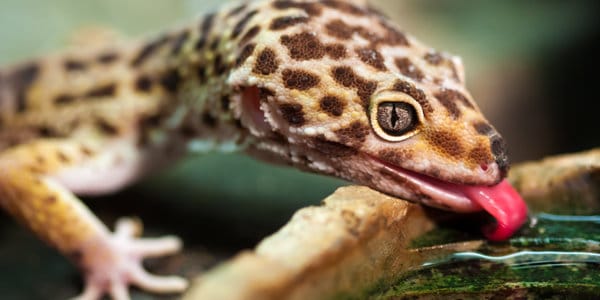
Water is known to aid digestion, hydration, and general health in humans and for your leopard gecko. Therefore ensure you provide fresh water daily and a moist hide where he can take a dip if he feels like it. Your gecko also can obtain moisture from foods like bugs, veggies, and fruits that you feed them.
When dehydrated, your geckos’ eyes will look sunken -wrinkly folded skin, lack of urates, and fecal matter. Also, its tail will appear small or shrunken up, meaning it is dehydrated.
2. Temperature
When the tank/enclosure temperature is too cold, your gecko will not be able to digest his food, resulting in poor appetite and digestion, thus being unable to poop. The recommended temperature is 90 degrees. To keep track use a temperature gun.
3. Diet
If your leo’s meal mainly consists of crickets, it might be causing them to be constipated. Therefore, it is recommended that you feed your gecko a balanced diet that includes insects, mealworms, fruits, vegetables, and calcium supplements, which will aid him in passing poop easily.
4. Your Leo Is Shedding
A loose shed might block poop from reaching the vent, where it’s passed. To help solve this, ensure the loose skin is shed completely by moistening your pet’s skin. Place your gecko in a bowl with warm water for around 30 minutes, and remove the shed using tweezers.
5. Size of the Enclosure
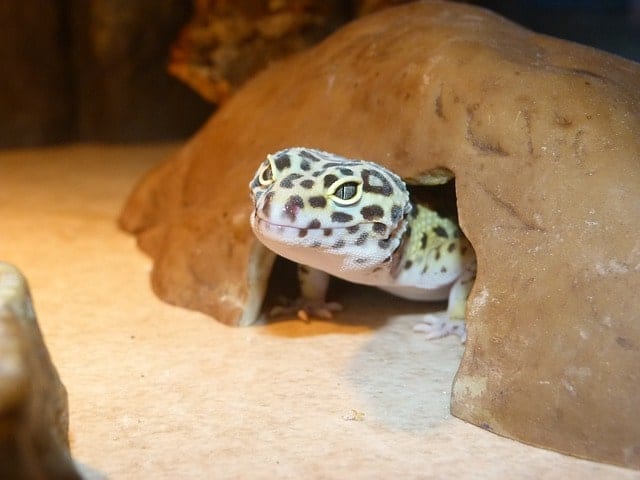
If your gecko’s tank is too small, it means he is not getting enough exercise and hence unable to poop. Ensure to provide a 15-gallon tank with a 10-15 gallon hiding area for him to use in his resting area and a dry towel, so he doesn’t lay directly on the substrate.
6. Your Leo Ate a Substrate
The loose substrate in your enclosure/tank can cause your Leo to become impacted, therefore, unable to poop. Impacted means your gecko will stop passing gas, causing his stomach to become hard. He will stop eating and try to pass feces out by pushing on his vent. Loose substrates include sand, and wood chips, among others.
Juvenile geckos have a big problem with impaction since they are young and trying everything to learn about their world. Therefore, don’t use loose substrate in your young gecko’s enclosure. The lack of minerals prompts them to eat substrates. In the wild, geckos eat dirt to balance their minerals and tend to do that in captivity. The loose substrate we provide our Leo’s is unsuitable as it is not digestible.
Therefore, ensure to provide a calcium source all the time; for example, when providing feeder insects, dust them with calcium powder; also, you can crush sepia bone and offer it in a bowl. These will help your gecko know where it gets its minerals and stop eating the substrate.
7. Your Pet Is Constipated
If your gecko is not pooping or straining while trying to poop is a sign that he is constipated. Give him some space while he is on his humid side for a while so he can pass the fecal matter on his own without you observing, potentially causing him stress even more.
Also, try to feed him crickets, mealworms, and water from a syringe every other day, as this will help soften the poop, and your gecko will be able to pass it more easily.
8. Eating Large Size Insects
Feeding your leopard gecko large size insects can lead to impaction and constipation. The recommended insect size should not exceed the width between the leopard gecko eyes.
9. Parasite Infection
If your leopard gecko is suffering from parasite infection in his guts, it can lead to lethargy and decrease appetite which eventually causes your gecko not too poop.
10. Stress
Leopard geckos can get stressed due to different reasons including loud noises, wrong temperature and humidity, new environment, and having more than one gecko in the same tank.
11. New Environment
As mentioned above, placing your leopard gecko in a new environment can cause stress which may lead to constipation and not passing poop. Give your pet some time to get used to the new environment.
How Long Can a Gecko Go Without Pooping?
Adult leopard geckos defecate once a day, but juvenile geckos will do so 2 or 3 times a day. Also, if your gecko eats daily, it will “go to the bathroom” often.
Geckos can go without pooping for about five days, but it’s good to note that once you notice your friend is not pooping after this time, it might be having digestion issues or constipation.
Signs Your Gecko Is Constipated
The most obvious sign of constipation is not being able to poop. Other signs to look out for are reduced appetite or your Leo will stop eating altogether. Also, he will start pushing on the vent area, try to defecate frantically, and become lethargic.
Signs Your Leopard Gecko Is Impacted
If your gecko is constipated, there are a few things you might notice. For one, they may start to lose their appetite or stop eating altogether.
You might also notice that they’re not as active as usual and that they’re spending more time basking in their warm spot. Another sign of constipation is if your gecko produces hard, dry stools when they poop.
If you notice any of these signs, it’s important to take action. The first thing you should do is increase the humidity in their enclosure. Next, you can try offering them a warm bath, which can help stimulate bowel movements.
If those don’t work, you can try giving them a gentle massage or offering them a piece of wet paper towel to help move things along.
What Happens If You Do Not Treat Your Leos’ Impacted Stomach?
If your leo has an impacted stomach, it is very important to seek medical treatment right away. If left untreated, an impacted stomach can cause severe health problems for your leo and may even be fatal.
Some of the potential complications of an untreated impact stomach include:
- Gastrointestinal blockage: Without treatment, the impacted material in your leo’s stomach can harden and block the gastrointestinal tract. This can lead to severe vomiting, dehydration, and weight loss.
- Infection: If the impacted material in your leo’s stomach contains bacteria, it can cause a serious infection that may spread throughout the body. Untreated infections can be life-threatening.
- Peritonitis: This is a serious complication that occurs when the contents of the stomach leak into the abdomen. Peritonitis can cause severe pain, fever, and shock. It is a potentially life-threatening condition that requires immediate medical treatment.
The best way to prevent these complications is to seek medical treatment as soon as you notice any sign that your leo’s stomach may be impacted.
How Do You Treat An Impacted Leopard Gecko?
If you think your leopard gecko may be impacted, the first thing you should do is take them to the vet. There, they will be able to confirm if your leopard gecko is impacted and make a plan for treatment.
Impacted leopard geckos usually require surgery to remove the impacted material. This is because it is very difficult to impossible to manually remove it all yourself and impactions can cause serious health problems if left untreated.
After surgery, it is important to monitor your leopard gecko closely. They will likely need pain medication and help with eating and drinking. With proper care, most leopard geckos make a full recovery from impactions.
What Measures Can You Take To Help Your Leopard Gecko Poop?
Try to feed your leopard gecko a teaspoon of canned puree pears or peaches or a little bit of canned pumpkin. The sugar content will stimulate the intestines to work faster, and fiber from the fruits softens fecal matter remaining inside your Leo’s system.
Also, apply a few drops of liquid paraffin or olive oil on your Leo’s anus to stimulate bowel movement. However, only do this once every few weeks because paraffin and olive oil can cause diarrhea and dehydration when used in excess.
Also, offer new foods like wax worms cut in bits to your leopard gecko. These will help you know if he is still interested in eating. Ensure there is no hard food, for example, the hard shell from mealworms in his food.
You can also try to massage and lightly scratch your gecko’s stomach. These will help stimulate the intestines to push out the fecal matter and gas.
Putting a few drops of apple cider vinegar in your geckos’ food will stimulate the bowels. Do not add too much to avoid hurting your geckos’ stomachs.
Also, you can help your pet drink water by using a syringe to feed him. Dehydration is a common problem.
You can encourage him to poop by taking a bit of poop from another gecko, wrapping it in tissue, and putting it in a section of the vivarium.
Ensure you monitor the temperature in your Leo’s enclosure. The recommended temperature is up to 90 degrees. Belly heat encourages digestion.
Conclusion
Monitoring your leopard gecko helps you know when they are not acting like themselves. You can do so by cleaning their enclosure daily and providing fresh water.
These will help you know when your gecko is not pooping. As a good pet owner, you must take good care of your friend.
Ensure enough space in its tank, provide them with a good diet, and include supplements like calcium in its food. Doing so will prevent your gecko from being constipated and having an impacted stomach.