Originating from the sandy dry lands and scrub hillsides in Queensland, Australia, Rankin’s dragons are one of the species of the genus pogona. These lizards look like scaled-down versions of bearded dragons. Also known as Pogona Henrylawsoni, Rankin’s dragons are super-friendly and personable.
While most people want to keep these reptiles as pets, they usually try to understand how big they get to offer better care. Rankin’s dragons are smaller than bearded dragons reaching an average length of between 8-12 inches. These lizards make the best reptile pets for beginners since they don’t need large vivarium’s like Pogona vitticeps.
Keep Reading to understand more about Rankin’s dragons’ size and other unique facts about them.
Rankin’s Dragons Growth Rate
Like central bearded dragons, Rankin’s dragons experience rapid growth during the first months after hatching. When the creatures are hatched, they need to be provided with more protein to facilitate the growth and development of muscles and bones.
Young beardies measure around 5-8 inches, while adults measure about 8-12 inches. Rankin’s dragons reach sexual maturity between 6-12 months. Whereas central beardies come out of the eggs with a lot of boldness, Rankin’s dragon hatchlings are a little shy and will need longer to settle into a new home.
Typically, Rankin’s dragons reach a maximum size of 12 inches when fully mature. Females tend to be slightly bigger and longer than males. This is because they need extra resources and energy to accommodate eggs when they’re fully mature.
10 Factors That Affect Rankin’s Dragon Growth
The requirements of Pogona Henrylawsoni are similar to those of their famous cousins, Pogona vitticeps. However, their small size and friendly attitude make things somewhat manageable. To ensure that these lizards stay in perfect health and achieve their growth milestones, you need to take care of the flowing:
1. Diet
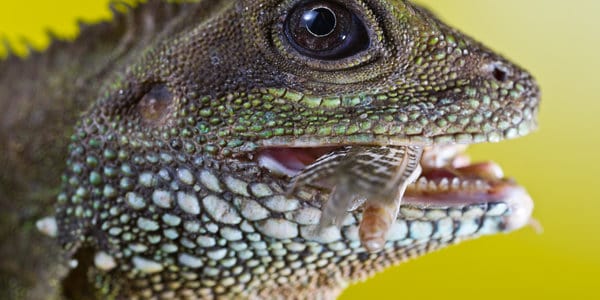
Rankin’s dragons are omnivores that can savor both insects and plant-based foods. They can eat live insects such as crickets, cockroaches, and various vegetables, greens, and fruits. They should also be offered calcium and vitamin supplements to get all the necessary nutrients.
Remember, live insects provided to these lizards should be smaller than the space between their eyes. This will ensure that they don’t have difficulty swallowing or suffer from impaction.
Young dragons should be fed a diet comprising 80% insects and 20% greens daily. Adults should eat at least 2-3 times a week on a diet that contains 20% insects and 80% greens.
Although Rankin’s dragons aren’t picky eaters, you shouldn’t feed them nutrient-deficient, acidic, or moisture-rich greens. These include spinach, onions, and iceberg lettuce.
2. Enclosure
You must provide Rankin’s dragon with a premium-quality enclosure for substantial growth and healthy living. These scaly friends thrive in glass enclosures with adequate ventilation. One of the sides of the terrarium should be covered in a high-quality glass screen or durable mesh.
Most tanks come with a sliding glass at the front to provide easy access to your lizard and maintain optimal humidity levels. The best part is that Rankin’s dragons are small and won’t require a massive enclosure.
However, this does not mean they should be housed in a tiny tank. It’s recommended that adult Rankin’s dragon should stay in a 30-40-gallon tank. You should ensure that the terrarium has the correct temperature, light, and humidity.
3. Temperature
A Rankin’s dragon’s tank should have a basking area and a cool relaxation zone. The cool end should have temperatures of about 75-85°F and 100-110°F in the basking area.
4. Lighting
To ensure that the reptiles get enough vitamin D, they should get 10 to 12 hours of UVB exposure. The lights should be switched off at night since these creatures can’t sleep with lights on. Ensure that you use high-quality UVB bulbs designed for reptiles.
5. Humidity
Rankin’s dragons live comfortably in moderate humidity. The moisture levels in their cages should be between 30 to 40%. Investing in a hygrometer will enable you to monitor the humidity inside the tank seamlessly.
6. Substrate and Enrichments
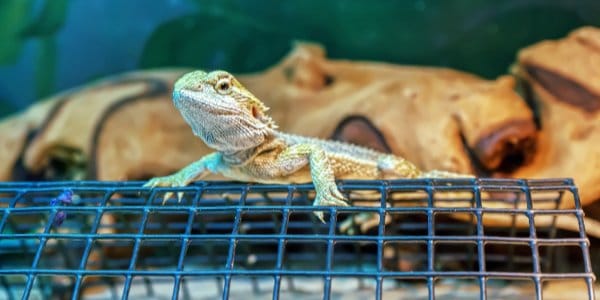
Using substrates and decorations, you should offer a near-natural experience to your Rankin’s dragon. You can use several substrates in Rankin’s dragon’s enclosures, including reptile carpet, tiles, paper towels, and newspapers. Avoid substrates with moisture and loose particle that can be ingested.
When it comes to decorations, you should put rocks, hideouts, and smooth stones to create a natural feel. And since these lizards are sub-arboreal, you should place high-rising branches, logs, and vegetation inside the enclosure to allow them to climb.
7. Metabolic Bone Disorder (MBD)
This is a serious condition caused by a calcium deficiency in the body. Its symptoms include loss of appetite, bone fractures, deformed bones, soft jaws, leg abnormalities, and uncoordinated movement. This condition is rectified through nutrition. However, it’s only treatable when detected early.
8. Mouth Rot
Rankin’s dragons may also suffer from mouth rot, a bacterial infection that attacks the gums and jaw. Its symptoms include swollen gums, decaying oral tissue, excessive drainage from the nose, and thick mucus.
9. Respiratory infections
Pathogens such as bacteria, fungi, and viruses can attack the dragon’s respiratory system leading to breathing complications. Respiratory infections will manifest through symptoms like shallow or rapid breathing, nasal discharge, lethargy, weight loss, and open mouth breathing.
10. Impaction
These lizards may also suffer blocked intestines from consuming indigestible materials and foods. Impaction can cause constipation, leg trebling, regurgitation, loss of appetite, lameness, and prominent stomach bulge.
If you notice signs and symptoms of sickness, contact your local reptile vet and schedule an appointment.
Final Verdict
Rankin’s dragons may not be famous as central bearded dragons, but they have a wide range of features that make them ideal pets. For starters, they are relatively smaller, measuring between 8-12 inches when fully mature. Their size means they don’t eat much nor require a lot of space.
However, as the guide details, you must ensure that these lizards consume a balanced diet, have a perfect enclosure, and are free-from health compilation for optimal growth and development. Here are some quick facts about Rankin’s dragons:
Scientific name: Pogona Henrylawsoni
Adult average size: 8-12 inches
Habitat: Rocky and scrub hillsides of Queensland, Australia
Adult enclosure size: 30-40-gallon tank
Expected lifespan: 7-10 years