There is a lot that barded dragons owners need to learn about their calm and docile lizard friends. Although care, maintenance, and diet are the integral aspects that most pet owners are concerned about, it’s also imperative that they learn about beardie’s reproduction.
Keepers should know everything about bearded dragon eggs, from their potency, incubation period, and how to care for them.
Let’s face it, breeding new baby pets is one of the best experiences for pet owners. However, you must understand various elements to complete this task without any hitches. How do you know if a lizard egg is alive? Check for a pink or red embryo surrounded by veins when the egg is held over a source of light.
Professional bearded dragon breeders have managed to stay in business for years by learning everything they need about bearded dragon eggs.
However, few pet owners know how to check if lizard eggs are alive. Learning how to tell whether their eggs are dead or not increases the chances of the eggs hatching into little bearded dragons.
If you’re one of the people seeking to understand things about bearded dragon eggs, including their color, texture, fertility, incubation, and regular maintenance, you’ve come to the right place.
How Do You Know If a Lizard’s Egg Is Alive?
Checking whether bearded dragon eggs are dead or alive is easy as long as you know the signs to look for. Herpetologists and bearded dragon experts have established a few ways to tell if beardie eggs are dead or alive.
1. Passing bright light through the egg
The most utilized technique for checking bearded dragon eggs’ fertility is candling. Hold the egg on both edges and place bright light underneath. If it looks like there’s nothing inside or the color of the eggs is yellow, this is a clear sign that the egg is dead and unsuitable for incubation.
2. Size of the egg
The size of a bearded dragon egg says much about ITS potency. Infertile eggs are smaller than fertile eggs. More importantly, fertile eggs swell up with time, but dead eggs remain the same even after several days and weeks.
3. Stinking and mold growth
When you incubate dead bearded dragon eggs, they don’t swell up or show signs of hatching. Instead, they will start producing a foul smell and might even begin to have molds.
When you see these signs, this indicates that the eggs are dead and no longer helpful. If eggs start producing molds, they should be removed from the incubator immediately since they can spoil the good eggs.
4. Webbed cracks on the egg
An egg remains potent if its contents are not exposed to the environment. If you notice large cracks or minimal webbed crackling, these are signs of a dead egg. Remember that cracked eggs should never be incubated.
5. The eggs texture
Since live eggs are constantly growing, they swell a little bit and boast a firm shell that’s soft to touch. On the contrary, dead eggs don’t swell, and their surfaces are too coarse and hard.
Bearded Egg Candling Process
Egg candling is the simplest and the best way to check whether your bearded dragon eggs are alive or dead. Here is how you go about it.
- Pick the eggs from the nesting box and place them on a tray without changing their orientation.
- Using a pencil, mark the egg’s top part and place the eggs back in their original position. Marking ensures you don’t turn the eggs upside as doing this can cause spoilage.
- Carry the eggs to the dark place.
- Find a light source and place it on a table. You can use a candle, a torch, or a bulb. However, ensure that the light source doesn’t produce a lot of heat since it can raise the temperature of the eggs and destroy the growing embryo.
- Pick each egg, place it above the light source, and watch the color of its internal content.
- Repeat the process for all the eggs
When light passes through a fertile egg, it casts pinkish waves at the top. More importantly, looking inside the egg, you’ll see the pink embryo and the network of red or pink blood vessels.
On the other hand, infertile eggs will display yellow light from the top, and you won’t see any embryo or blood capillaries inside the egg.
How Soon Can You Candle Bearded Dragon Eggs?
While candling helps determine whether eggs are dead or alive, it should not be done immediately after the eggs are laid. You should wait for at least three to four days after the bearded dragon lays the eggs.
This allows the embryo to attach to the egg fully and the network of vessels to be visible. Avoid handling the eggs too soon after they are laid, as this might detach the embryo, leading to spoilage.
While checking whether your eggs are fertile is essential, it’s also crucial that you take care of the beardie’s eggs to ensure that you don’t spoil them yourself.
After checking whether the eggs are alive for the first time, don’t discard those that look like they’re unfertile immediately. Wait for two weeks to see if the eggs will develop the embryo and the veins.
What Color Should Bearded Dragons Eggs Be?
Fertile and infertile bearded dragon eggs come in different colors. Fertile eggs primarily exude white or cream hues. On the other hand, infertile eggs are generally yellowish. Bearded dragon eggs are small in size and boast an oval shape.
You can also notice the color difference between live and dead eggs during the candling process. When you place a bright light beneath a fertile egg, it will display a pinkish light at the top.
On the other hand, infertile eggs cast a yellow hue when you pass light through them.
How Do You Incubate Bearded Dragon Eggs?
To ensure that bearded dragon eggs hatch into new babies, you must incubate them in the right way. Bearded dragon owners should follow these steps when incubating the beardie eggs:
1. Gather the right supplies
Whether you want to DIY or use a ready-made incubator, there are a few things that you’ll need to have. You’ll need a solid box with a tight lid, a substrate that doesn’t absorb or lose moisture, and tools to monitor and measure humidity and temperature.
You can also buy a ready-made incubator with all the necessary accessories. Additionally, you can use a chicken egg incubator.
However, you’ll have to change the chicken incubator to prevent eggs from turning, accommodate the substrate, and monitor temperature and humidity.
2. Build a perfect nest for your bearded dragon
Bearded dragon owners will need to care for the eggs from the moment they are laid. The first thing you need to do is provide a perfect nest. If the enclosure seems cluttered, you may need to get the lizard out of the cage to reduce stress.
If you don’t provide a nest, the female beardie might bury the eggs in the substrate, leading to spoilage.
3. Get the Incubator Ready
The incubator should be prepared before the eggs are laid. First, you’ll need to add the substrate to the box to prevent eggs from turning and maintain the moisture and heat at optimal levels.
Ensure that the incubator has the proper humidity and temperature settings. Humidity should be maintained at around 75% and the temperature between 80-85°F.
4. Move the eggs to the incubator
Once everything is ready in the incubator, you can transfer the eggs from the nest to the incubator. You mustn’t change the eggs’ orientation when moving them to the incubator.
Turning, rolling, or flipping the eggs can lead to the embryo’s detachment and the egg’s eventual death.
The eggs should be tucked into a divot in the substrate to ensure they don’t roll and retain the proper humidity and temperature.
5. Monitor the incubator settings
Ensure that the incubator settings are consistent by monitoring them for the first few hours. You must ensure that the incubator is not too cold or hot.
Once you are sure that the system is operating optimally, you can put monitoring schedules a few times daily.
You should also check the eggs daily to ensure they are still alive. Peek in to see whether the substrate around the eggs is not molding nor producing fungus. You’ll need to remove eggs that are molding or rotting.
If you follow these steps, you can now relax and wait for you’re young beards to hatch out of the eggs.
Why Are My Bearded Dragon Eggs Collapsing?
You might notice that your bearded dragon’s eggs are collapsing and not developing as expected. Although eggs become slightly wrinkled and deflated a day or two before hatching, this should not happen earlier in the cycle.
One frequently asked question is whether bearded dragon eggs are supposed to be soft. The answer is yes. Bearded dragon eggs feature soft leathery shells that allow air circulation. The softness also makes it easy for baby beardies to pop out when it’s time.
If bearded dragon eggs start collapsing and wrinkling several days before hatching, the primary causes may be incorrect humidity, temperature, and fertility. Since bearded dragons boast soft, fragile shells, environmental changes easily compromise them.
The eggs may also collapse if they are infertile. You should pass light through the eggs and watch whether there is a small pink or red circle with a network of veins branching from it. If none of these features are visible, then the egg is infertile.
Can You Save Collapsed Bearded Dragon Eggs?
A collapsed egg can only be saved if it’s still alive by the time you realize it. As the section above explains, three things can cause the egg to collapse.
These are infertility, too high or low temperature, and humidity. If the wrinkling of the egg is due to infertility, there’s no way to save the egg.
However, if you notice the eggs collapsing due to temperature and humidity, you can reset them to optimal levels and prevent further wrinkling.
If the collapse has not yet damaged the embryo, you can save the egg by restoring the recommended temperature and humidity levels.
What Should I Do With Infertile Bearded Dragon Eggs?
Since infertile eggs have no use, you should discard them once you realize they are dead. Since female beardies can lay eggs without the male being around, infertile eggs are not rare. Still, the female bearded dragon may also lay infertile eggs even when the male is around.
When you establish that the eggs lack an embryo or veins, you should plan how to discard them properly. However, leave the eggs for up to two weeks after being laid to see whether they will have developed embryos by then. If they have a pink or red circle surrounded by veins in week two, you’ll need to discard them.
Don’t store unfertile eggs with those that are alive. Over time, the dead eggs start to develop molds and fungi, which can spread to the healthy eggs. Therefore, you must eliminate them as soon as you discover they are infertile.
Can Bearded Dragon Eggs Hatch Without Incubation?
It’s challenging to hatch bearded dragon eggs without an incubator. However, it’s something that you can achieve with proper planning and management. In the wild, bearded dragons lay eggs, bury them under the soil, and leave them to hatch.
In the same way, you can hatch the eggs without an incubator. Follow these instructions if you want to hatch beardie eggs without the incubator.
- Remove the bearded dragon from the enclosure and get rid of all its beddings.
- Place a substrate in the cage.
- Pick the eggs from the nest and bury them under the substrate.
- Dip a thermometer into the substrate to monitor the temperature.
- Maintain the appropriate temperature using a lamp or heating pads.
The temperature should be around 80 to 85 ˚F. There should be an under-tank heater and an overhead lamp.
How Do You Take Care Of A Bearded Dragon After Laying Eggs?
A gravid Bearded dragon requires several nutrients and care. Conversely, they use a lot of energy to lay eggs. Therefore, they need the nutrients to be replenished to optimal levels once they lay eggs.
They also need the right living conditions to ensure they don’t get sick during a period when they may feel a little bit weak. You should provide beardies with the following after they have laid eggs:
- Clean enclosure
- Right temperature and humidity
- A balanced diet consisting of veggies, fruits, and insects
- Mineral and vitamins supplements
- Adequate calcium in every meal
Caring for the mother ensures they regain strength and live happy and fulfilling lives. However, don’t hesitate to consult your local reptile vet if you think the mother, eggs, or babies have issues.
FAQs about Bearded Dragon Eggs
Are Bearded Dragon Eggs Supposed To Be Soft?
Yes, bearded dragon eggs are soft and fragile and thus should be handled with utmost care. The bearded dragon eggs soft shell allows air and moisture exchange between the egg and the environment.
How Can You Tell If Bearded Dragon Eggs Are Still Good?
First, look at the egg’s size and the shell’s texture. If the egg is still fertile, it will become more prominent in size as time goes by and will have a white or creamy hue. Secondly, dead eggs will start to rot and form molds.
How Can You Tell If A Reptile Egg Is Fertile?
A fertile egg will have a pink or red embryo surrounded by blood vessels. This can only be seen when you place the egg over a light source and look inside. If the embryo and veins are visible when you perform candling, the egg is still fertile and can be incubated.
Do Bearded Dragons Bury Their Eggs?
In the wild, beardies look for the perfect nesting spot, lay their eggs, and bury them with sand. This ensures that they are safe from predators and harsh environmental conditions.
Even in captivity, the bearded dragon’s instincts will tell it to cover the eggs with the substrate.
Can Infertile Bearded Dragon Eggs Hatch?
No, they can’t! Bearded dragon eggs need to have an embryo for them to grow and become baby bearded dragons. Since infertile eggs don’t have embryos, there’s no way they can hatch.
Once you discover infertile bearded dragon eggs, please don’t waste your time putting them in the incubator, as they will never hatch. The best they can do is to collapse, grow molds and start to spread nastily.
How Long Does It Take For Bearded Dragon Eggs to Hatch?
A fertile bearded dragon eggs will take approximately 55-75 days to hatch when the right temperature and humidity are maintained. However, low temperatures can make the hatching processes take longer.
Final Verdict
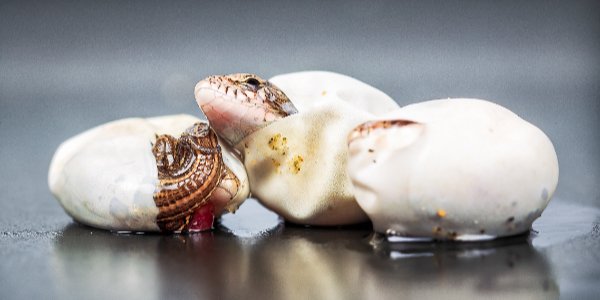
Hatching new baby dragons is one of the most fulfilling experiences for pet owners. However, to achieve this, you need to know how to tell whether a bearded dragon’s eggs are alive or dead.
Conversely, you need to understand how to take care of the eggs from when they are laid to when they hatch.
This piece covers everything about bearded dragon fertile and infertile eggs to help you bring new beardies to life without hassle. We hope that this guide covers everything you may need to know about bearded dragon eggs.