Leopard geckos make cute, small-sized reptile pets. They are an excellent choice for pet owners who want a docile reptile that is hardy and lives for relatively long. Even so, it is vital to understand the animal and its behaviors to ensure that you provide it with a good environment. For example, one of these behaviors is climbing, but do leopard geckos climb everything?
Can leopard geckos climb glass?
No, leopard geckos can’t climb glass. It is often slippery, and these reptiles don’t have suction foot pads typical in most other gecko species. Instead, leopard geckos have hooked claws, which, although they help them climb, do not enable them to climb glass.
Although leopard geckos can’t climb glass, they can climb other things in their enclosure. Reptiles are curious animals that explore their environment, and climbing is one of the ways they do this.
Below we get to explore more on why leopard geckos attempt to climb glass and various climbing accessories you can provide the reptile with in captivity.
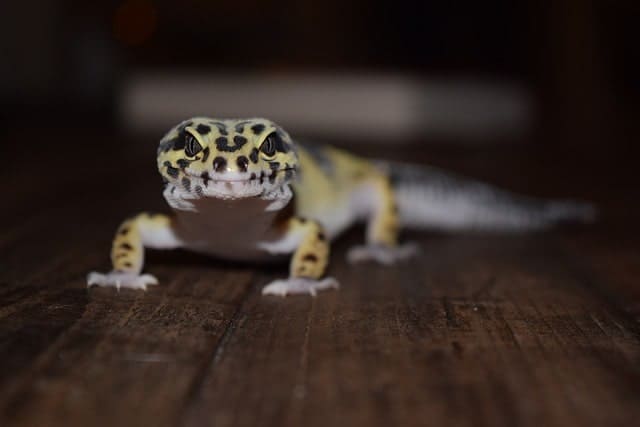
Leopard Gecko’s Glass Surfing
Your leopard gecko might seem like it wants to climb the glass wall of its enclosure. This attempt is known as glass surfing. When doing so, the geckos tend to lift their arms in a waving manner and rub their noses against the glass as they try to grip its surface.
Glass surfing in leopard geckos might be due to reasons such as feeling cold, hunger, boredom, trying to run from other geckos in the enclosure, or when they are affected by mites. Let us have an in-depth look at these reasons.
6 Reasons Why Your Leopard Gecko Is Glass Surfing
1. Exploring The Environment
Leopard geckos are curious animals, and in the wild, there are no limitations or barriers to exploring their environment. However, in captivity, it is normal for the gecko to want to explore the surroundings as much as possible, including outside the cage, which is not always possible.
As such, a leopard gecko is likely to glass surf as an instinct to familiarize itself and explore the entire habitat. They do so since they don’t know they can’t climb the glass.
2. Small Or Shared Enclosure
Leopard geckos do not need a huge enclosure. However, a tiny one can stress the reptile or make it glass surf when shared with other geckos. These active reptiles require enough space to bask, explore, hide and generally move around.
In general, 20 gallons is the optimal enclosure size for a mature leopard gecko. However, if you keep a male with multiple females or multiple females together, you should get a bigger enclosure that gives each enough hiding and exploring room.
Tiny space is one of the critical triggers of aggression when a male and multiple females or multiple female leopard geckos of the same size live together. Else, they should peacefully co-exist.
3. New Enclosure
While the enclosure size might be okay, your leopard gecko might still glass surf because of a new enclosure or if the leopard gecko is new in your home.
Naturally, these reptiles fear changes and unfamiliar items. However, it is no cause for alarm, and the lizard will get accustomed to the new environment.
4. Hunger
Glass surfing might be the leopard gecko’s cue to you that it is hungry. However, it might also glass surf when hungry in an attempt to hunt as it would in the wild. To prevent starvation in a leopard gecko, create a suitable feeding schedule depending on the gecko’s age and health status.
Generally, their babies and juveniles should be given small insects daily, while mature ones should be fed appropriate portions twice or thrice a week.
5. Incorrect Temperatures
Because their natural environment is often very hot, leopard geckos in captivity need a basking light. Low temperatures can stress the lizard as it might be unable to regulate its body temperature or digest food.
On the other hand, extremely high temperatures can make the lizard uncomfortable or even cause burning.
A leopard gecko’s basking area temperature should range between 90 and 95 degrees Fahrenheit, while the warmer side should be between 80 and 85 degrees Fahrenheit.
Therefore, you should place this lamp on one end of the enclosure to ensure that the reptile has a cooler side. This cooler side should have a temperature of between 75 and 80 degrees Fahrenheit and provide the lizard with space to cool down.
A digital thermometer will help you get quick and accurate readings to verify if the warmth is within the suitable range.
6. New Accessories
The right accessories can enrich the life of your leopard gecko. Even so, new items can stress the reptile, especially if they do not resemble what the lizard naturally comes across in the wild.
As such, it is best to introduce new accessories one at a time and allow the pet to adjust. Avoid accessories that look like their prey because the lizard might never get used to them.
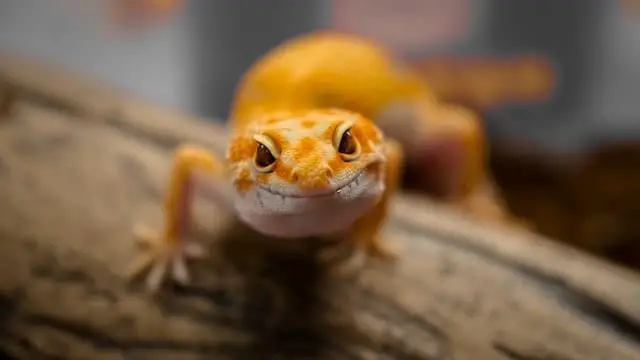
5 Climbable Accessories For Leopard Geckos
Naturally, most leopard geckos like to climb to a certain extent and enjoy exploring the enclosure and outside. Although they can’t climb glass, you can provide some accessories in the tank for the gecko to climb.
Here are some accessories you can consider to alleviate boredom, keep the leopard gecko active, and as an alternative to climbing glass.
Rocks
Artificial rocks are a vital part of a leopard gecko’s enclosure. They are often versatile as they often provide a hiding or burrowing spot while enabling the reptile to climb and explore other parts of their enclosure.
Some rocks come with additional enhancement items, such as small artificial waterfall that not only make them interesting for the leopard gecko to explore but also make the habitat aesthetically pleasing.
Keep in mind that these leopards can’t swim, so any water in the enclosure should be very shallow to prevent the lizard from drowning.
Small Logs And Sticks
Leopard geckos come across logs and sticks in their native environment. So naturally, they will explore the same when you add it to their enclosure.
Remove the bark and check if it has parasites. Besides, you may bake the accessories to ensure that any parasites present are killed.
Artificial Plants
Another climbable accessory you can get is artificial plants. They enrich the gecko’s life by imitating its natural environment and providing it with space or climbing areas.
Look for those resembling the ones found in the reptile’s natural environment.
Hides
Although hides aren’t primarily for climbing, you can choose one with a steep surface to keep the animal active. In addition, such an accessory will provide your gecko with a safe hideout from other geckos in the enclosure.
Hammock
Hammocks come in different materials, such as polyester, rope, and woven cotton. While each has its benefits and downsides depending on the type of pet, rope hammocks are the perfect choice for leopard geckos.
A hammock allows the gecko to hang onto or relax in the enclosure. Choose a sturdy one with strong suction cups to keep the gecko safe and prevent fall-related injuries.
Safety Tips
Whichever accessories you choose, ensure that they do not have pointy areas that can injure the leopard gecko. In addition, the accessories should be big enough to ensure that your pet reptile does not get stuck but should also not occupy the entire enclosure. Further, it should not be too high as the lizard can not only fall but also climb out of the tank.
Irrespective of where you get the accessories from, clean and disinfect them. You may use a reptile-safe disinfectant or a mixture of water and bleach in a 9-to-1 ratio. It will help avoid transferring bacteria, chemicals, and dirt into the habitat.
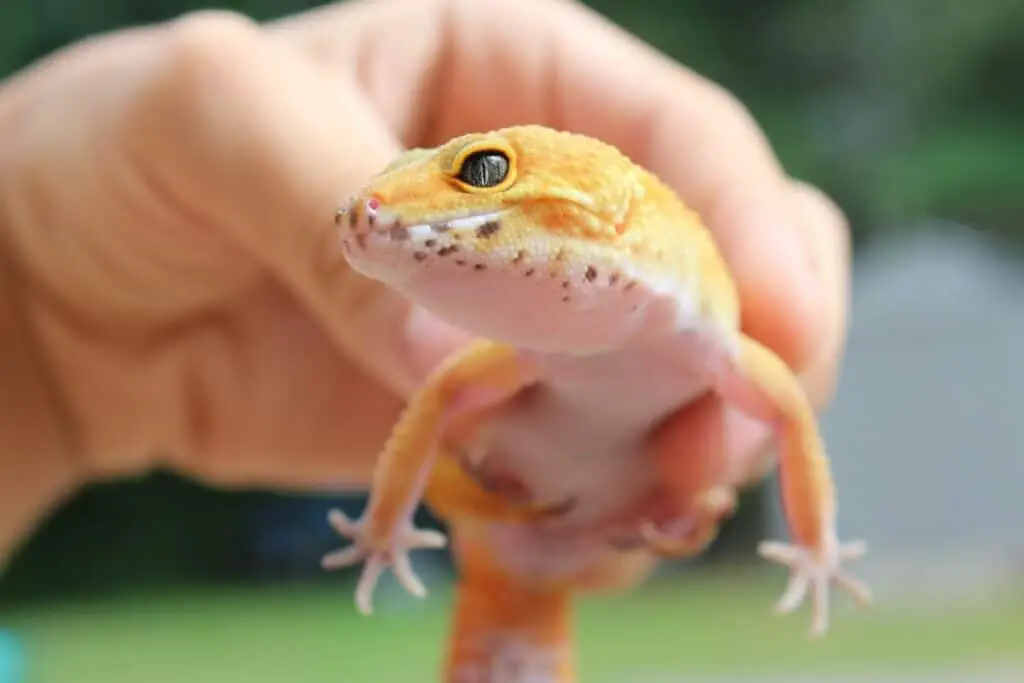
Frequently Asked Question
Can A Leopard Gecko Climb Out Of A Tank?
Yes, a leopard gecko can climb out of the tank through the accessories inside. However, it can’t do so by climbing up the glass, as its toes do not enable it to do so. To avoid this, ensure that the top of the enclosure is covered and the accessories in the tank are not very tall.
Do Leopard Geckos Like To Climb?
Leopard geckos are curious reptiles and will explore their environment, whether in captivity or the wild. Climbing is one of the ways they achieve this.
Why Is My Leopard Gecko Glass Surfing?
Leopard geckos can glass surf for various reasons, some of which should not worry you. These include an attempt to explore the environment and or to see you. However, the behavior might be a concern if the leopard gecko does so due to hunger, a threat by other geckos in the enclosure, stress, incorrect temperatures, or a small tank.