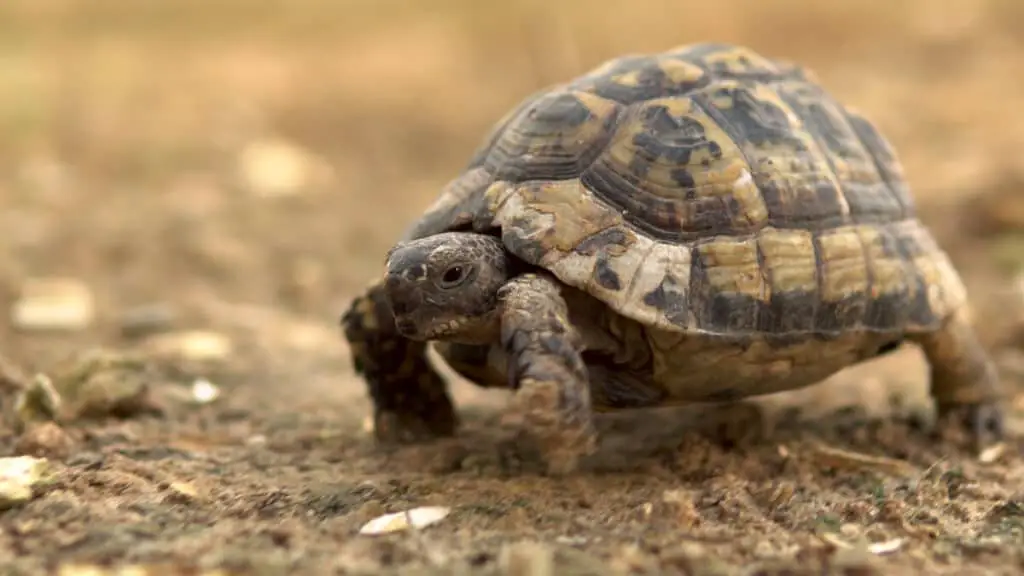
Obesity is a common problem for most animals, including turtles. Turtles may not seem like the kind to get fat, considering their body is made out of the shell. But they actually get overweight if fed an unsuitable diet, overfeeding, and a lack of activity. While getting fat for a turtle is dangerous, it can be solved easily if the problem is handled properly.
Obese turtles are easy to spot with their protruding fatty skins and a rather sluggish lifestyle that mostly revolves around looking for more food and sleeping. Over time the accumulated fat is bound to cause other life-threatening conditions such as excessive internal pressure on critical organs such as kidneys. Overweight turtles cannot defend themselves due to reduced movement, and they cannot fully retract their heads back into the shell for protection against predators. The rest of this article will cover obesity in turtles and what to do if yours is overweight.
How To Spot an Overweight Turtle
Most people assume that it’s difficult to notice obesity in turtles because the body is hidden inside the shell. This is true to some extent, but if you look closer, you should be able to spot it. Common signs of obesity in turtles are they will have a fat roll on their neck combined with fat legs. This can be seen when the turtle struggles even to fit its head into the shell. You may also notice pyramiding, where the shell loses its normal flat appearance and begins to protrude. Protruding is a sign of obesity caused by eating too much protein.
Also, a fat turtle will lay for hours and only get active when it’s time to eat. They may also eat more than usual because fat turtles have more appetite than normal.
What Causes a Turtle to Be Fat?
Obesity in turtles is caused by various factors, all of which revolve around how many calories your turtle eats per day and how many calories they expend at the same time. Over time, the turtle’s fat tissues begin to put pressure on other internal organs, leading to performance reduction and compromising the turtle’s overall health. Turtles often get fat due to:
Overfeeding
Turtles spend most of their day laying around or slowly moving, which requires little in terms of energy. They are also cold blood, meaning they don’t need to maintain their body temperature. When this low energy usage gets combined with excess feeding, the result is an obese turtle. Turtle owners should remember that a turtle’s diet changes as it grows, just as it would out in the wild. Turtles should be fed regularly or at least daily during their younger age as they are pretty energetic and able to burn most of the calories as they explore around. On the other hand, you should not feed adult turtles too often as they move around less and accumulate more fat with each excessive meal.
Feeding Unhealthy Diet
A turtle’s diet should emulate the very sort of things it would feed on out in the wild and not human foods. With most processed food containing loads of sugar and fat that can disrupt a turtle’s digestion process, it’s no wonder that most of these pets end up getting fat. Ideally, turtles should feed on fiber-rich diets, which their digestive systems can break down. Some turtles are also herbivorous so avoid feeding them a carnivore diet that might cause nutritional problems and lead to obesity later on down the line.
Lack of Activity
Inactive turtles often accumulate more fat as they are not burning calories moving around. On top of triggering obesity, lack of activity can also lead to joint complications as the turtle becomes overweight and the flippers can no longer hold the weight. As the fat bulges out around their armpits and around their legs, it becomes increasingly more complicated for the turtle to be mobile which further compounds the weight gain problem.
Risks Associated with Obesity
Reduced Mobility
Fat turtles are often unable to move as fast as healthy ones. The excessive fat buildup around their necks can even prevent them from pulling their heads back into the shell. This can be risky for the turtle out in the wild, where it needs to move quickly and support its own weight.
Fat turtles that struggle to pull their heads back into the shell often end up bruising and scratching the sensitive skin, which can lead to bacterial infection. This is further exacerbated by the fact that obese turtles are also less likely to heal quickly, which worsens the condition around the infected wound.
In the case of insecurity, obesity means they may not be able to hide in the shell quicker enough and end up being attacked by predators. This way, they could become an easy target.
Turtles are already quite heavy for their small bodies, and adding more weight will only exert more pressure, and they will barely move.
Increased Stress on Internal Organs
Fat tissues that accumulate within the turtle’s body apply unwarranted pressure on several internal organs such as kidneys leading to reduced bodily function. In extreme cases, obesity has been known to cause organ failure and shell deformities.
How to Prevent Obesity in Turtles
It’s a fact that a lack of exercise and overfeeding are the two main contributing factors to obesity. Turtles need to have an active lifestyle and be free of stress which can be an issue for turtles in small enclosures. If you are going to adopt a turtle, you need to provide enough horizontal and vertical space.
There should be enough water inside the tank because turtles enjoy swimming. Swimming is their major source of exercise, and it helps them burn excess calories and maintain the right weight.
Speaking about overfeeding, this is directly related to the food you give your turtle and how much. Too much protein and sugar have been linked to weight gain in turtles. This does not mean you should avoid them, but you should provide them in moderation. Many turtle parents prefer offering fruit treats once per week. For omnivorous turtles such as box turtles and map turtles, protein content should make up not more than 30% of the turtle’s diet. An active lifestyle, a balanced diet, and a strict food regime will ensure the turtle doesn’t get fat.
Here are a few things to do to prevent obesity
Feed the Right Amount of Food
If your turtle is overweight, the first thing you need to do is reevaluate its feeding. Reduce the number of times you feed the turtle and consider feeding it every other day until you can achieve it once in three days. While doing this, cut down the amount of food you provide. Eventually, the turtle should burn calories and achieve a healthy weight. According to your turtle species, you can use a scale to track the weight loss progress to achieve the right weight. Keep in mind that obese turtles should not be offered snacks in between meals. Make sure to wash your hands with soapy water after handling your turtle to avoid salmonella.
There are two different approaches to healthy feeding to ensure you don’t overfeed your turtle.
- The first approach is to feed your pet as much as they can eat in 15 minutes. After this period, you should remove any uneaten food from the tank. This is the most commonly used method because it’s simple. Still, you need to calibrate the amount as you get to know the feeding habits more.
- The second approach is to feed the turtle a fixed amount of food. You should use a small container like a medicine cup to measure the food for this method. The container you use should be the same size as the turtle’s head – for proteins and food pellets. The turtle grows with the pace of its head. As such, the more the turtle grows, the more food it should be fed.
You can also use a plastic bag to measure the head determine the amount fed to the turtle. Place the food inside a plastic bag and squeeze so that the food is compact so that the bag is about the same size as the turtle’s head. Although the approach takes more time, it’s a more accurate way to prevent overfeeding a turtle.
Regardless of which method you choose, make sure the turtle is well-fed. Not overfed.
Follow a Strict Feeding Schedule.
As mentioned before, a feeding schedule is a must to prevent obesity in turtles. This means you need to draw up a feeding schedule to control feeding. Whatever schedule you choose, ensure you follow these rules.
- For hatchlings, feed them once a day and provide more protein content for growth.
- For adults over a year old, feed once every two days
- Older adults should eat once every three days
If your turtle is omnivorous, e.g., box turtle, here is an example of a suitable schedule.
- Commercial turtle pellets on day one
- Leafy greens and plants on day two
- Animal proteins such as fish, super worms, and mealworms
- More leafy greens and veggies on days four and five
There’s a need to offer a higher protein percentage of animal proteins for carnivorous turtles such as musk and mud turtles. Pellets should form the main diet, followed by plant matter in the ratio 3:1. Herbivorous turtles like cooters and adult painted turtles should eat more plant matter. Ensure you offer variety but do not feed more than necessary.
Also, make sure to feed the turtle at the same time of the day because turtles know the time when food comes and will even start hitting the tank when it’s time.
Foods to Feed the Turtle So It Doesn’t Get Overweight.
In order to maintain a healthy turtle, you will need to feed it a diet that closely replicates the natural diet of wild turtles. Keep in mind that various species have different diets ranging from herbivores to omnivores. If you have trouble finding out which species your pet turtle belongs to, you should contact your vet.
Omnivorous turtles can feed on a mixture of plant and protein diets that are found in their natural habitats to avoid getting overweight. These turtles prefer berries, fruits, and leafy vegetables. You can feed them insects, small fish, meat, and worms in terms of protein sources. Omnivorous turtles can also be fed turtle pellets to balance their vitamins and nutritional intake. You could also try the following protein sources:
- Feeder fish, e.g., comet goldfish
- Mealworms
- Small insects, e.g., grasshoppers, crickets, and moths
- Snails and slugs
- Waxworms
- Hard-boiled eggs
Herbivorous turtles rely on leafy greens, which they can comfortably digest. You can feed them collards, and dandelions although you should avoid plants with high levels of oxalates, such as commercially grown spinach, parsley, and chives. Herbivores also love fruits such as cantaloupes, mangoes, water melons, and bananas. If you can get aquatic plants such as water hyacinth, duckweed, and water lettuce, make sure that they dont contain toxins harmful to your pet turtle.
A healthy meal of chopped-up dark green vegetables can be fed to herbivorous and omnivorous turtles. You can include the following:
- Kale
- Mustard greens
- Collard
- Zucchini
- Carrots
- Squash
You can also supplement a turtle’s diet with commercial pellets. These are often induced with calcium and other minerals that turtles require to develop healthy shells. Keep in mind that manufacturers often mix the nutritional content differently for each lineup of turtle pellets, so make sure that you get only the recommended food brands for each turtle species. A general rule to feeding turtles relies on estimating the size of their head and feeding them an amount that’s roughly ⅔ the size of their heads.
The primary reason why you should strictly control how many pellets a turtle eats each day is to prevent the consumption of too much protein content. This is due to the growth of abnormally shaped scutes above the normal domed shell. This condition, also known as pyramiding, is often a sign of overfeeding, often accompanied by being overweight, and should be a warning to a turtle owner on the need to change the diet. Although pyramiding cannot be reversed, you can feed your pet turtle on a healthier diet with less protein content to prevent further damage.
Fruits
Since fruits are high on sugar, they should not form a major part of the diet. Some excellent fruits turtles enjoy include apples, bananas, cantaloupe, blackberries, honeydew melon, blueberries, mulberries, and strawberries.
Vitamin and Calcium Supplementation
Vitamin supplements ensure captive turtles get the right balance of different vitamins and calcium. Without these nutrients, the turtle can easily suffer from metabolic bone disease. To ensure this does not happen, consider dusting the turtle’s food with these nutrients twice a week. You can easily find excellent choices of supplements and if unsure, ask your herp vet.
Get a Bigger Tank
As you might already know, one of the key elements in staying fit for a turtle is to exercise. While turtles won’t need to run on a treadmill or do Crossfit, they need some exercise, and theirs is just swimming around. You don’t need to get any fancy equipment for them. Just ensure you provide enough vertical and horizontal space.
Reconsider the tank if you got your turtle as a juvenile, as it may have grown a lot in the last year. Perhaps the tank you got, in the beginning, is probably too small. There should be 10 gallons of water in the tank for each inch of the turtle’s shell. Let’s say you got your turtle at 3 inches, and you had a 40-gallon tank which was sufficient. But now your turtle is 6 inches big, meaning the 40-gallon tank is too small. You need to get at least a 60-gallon tank to provide enough space for the turtle. If the tank size is a problem for you, you should get the biggest tank you can afford instead of changing the tank after every 3 years. It’s cheaper to buy a bigger one than many smaller ones in the long run.
Put the Turtle in a Backyard Pond.
If the tank size no longer meets the turtle’s exercise needs, you need to rethink how you can provide more space. If you don’t want a bigger tank, a better long-term plan is to build a small pond for the turtle in the backyard. A small outdoor pond will not only offer more exercising space along with an area for basking. Avoid transferring your outdoor turtle to an outside space abruptly as they may struggle to survive in the new habitat. Instead, take the turtle from time to time until they have adapted to the new pond.
Exercise Drills
A few exercise drills can also work for fat turtles. An easy way to exercise a turtle is to add a slight elevation between the pond/tank and the basking area. You can also come up with new hiding places and plants that the turtle can climb. You could also place their food a bit further so that the turtle covers the distance to go eat. These fun drills may not show instant results but will help him use more energy and lose fats in the long term.
Veterinary Checkups
Your vet can help you identify any signs of overfeeding in your turtle. Therefore you should ask a vet for assistance if you’re unsure. Fortunately, a vet will conduct a medical exam and advise you on the best path to go. Your vet should encourage you to weigh the turtle and keep recorded information for progress.
What to Do If Your Turtle Is Overweight
If your turtle is overweight, there are different things you can do to reverse it. If the weight gain is slight and nothing major, the first step is to identify the cause. If you think you’ve fed the turtle too much, then you simply need to adjust the diet, amount, and schedule as described in this guide. If you think your tank is too small, make sure you get a bigger tank for more space.
If the turtle is dangerously fat and the methods above don’t work, you probably need to consult a vet. This may not entirely be down to diet and might be something medical instead. Although medical cases are rare in turtles, this does not mean they can’t happen. You should consult your vet if you think it could be something.
Can An Obese Turtle Turn Itself Over?
It depends. Excessive amounts of weight can accumulate around the necks and make the arms and legs bulge. The extra weight affects the turtle such that it becomes beached on land and may contend with a higher gravity barrier. If they can’t use their legs to overcome this barrier, flipping over becomes difficult.
Why Are Obese Turtles Always Hungry?
In the wild, turtles rely on actively scavenging for all types of foods such as crickets, worms, and pants. However, due to naturally occurring shortages, turtles are always forced to eat whenever food is present as they might take a while to find their next meal. The same condition afflicts obese turtles, whereby their bodies naturally crave more food even when they are too heavy to move around as much as they want. Keep in mind that obese turtles cannot tell if there is a food scarcity or not, so it is up to you as the owner to create an artificial scarcity by taking away the food after the initial 20 minutes or so of feeding. this prevents obese turtles from gauging on even more food that would only worsen their fatty condition.
What Not to Feed Your Turtle
As a turtle owner, you should be conversant with some of the harmful foods to your turtle’s health and know how to avoid them. While wild turtles can feed freely and hunt for their food, turtles raised in captivity tend to feed on just about anything. Hence, it is up to you to take care of them and know which plants or animal-based foods you should keep away from the turtles as they roam around in the backyard or their prepared habitat.
Toxic Plants
Some plants contain compounds that are considered to be harmful to turtles. Plants containing oxalate salts can cause swelling, burning, and pain when turtles contact them. These include:
- Arrowhead vine
- Boston ivy
- Elephant’s ear
- Firethorn
- Umbrella tree
- Swiss cheese plant
- Amaryllis
- Avocado leaves and seeds
- Boxwood
- Buttercup
- Castor beans
Raw Wild-Caught Organisms
While live protein sources are great for your turtles, you should be careful in terms of where you catch them due to the presence of infections and contaminants. Fish and amphibians caught in polluted water are likely to contain high levels of heavy metals and other contaminants that could be lethal to your turtle when consumed in large amounts. Instead, you can supplement your turtle’s diet with store-bought fish and cooked but unsalted meat sparingly.
Oily Foods
Avoid feeding your turtle’s any food made specifically for humans as they tend to have more fat content that’s unhealthy for your turtle. Foods such as pizza, burgers, and even BBQ can lead to overweight turtles and digestive complications. Oily fish such as mackerel and smelt should be fed sparingly as they may trigger a nutritional imbalance and vitamin E deficiency.
Dairy Products
Turtles did not evolve to naturally digest dairy products, to digest dairy products naturally, so avoid feeding them milk, cheese, or any other food items that might contain dairy products. These are likely to trigger severe indigestion and long-term health complications.
Sweets
Turtles should not be fed sweets, chocolate, corn syrup, or any other food product containing processed sugar. This is because the turtle’s digestive system is not adapted to digest such a large amount of concentrated sugar. Such extreme caloric intake can also lead to obesity.
Salty Foods
While turtles can naturally regulate their salt and minerals intake, their kidneys cannot handle excessive amounts of seasoning. Consumption of salty foods also affects the uptake of calcium and phosphorus, which play a critical role in forming scutes and a healthy shell. Avoid feeding your turtle highly salty foods as it will interfere with their water retention capabilities as well.
Wrap Up
Can turtles get fat? Definitely! The main causes of obesity in turtles are overfeeding, a lack of activity, and feeding harmful human food. To keep your turtle active, make the enclosure large and limit the food. You could also use live bait to make the turtle work for its food. Following a strict schedule will also ensure you don’t overfeed it as long as you don’t use snacks and treats in between feeding times. Owners need to understand that turtles need little food to survive.
If your turtle is dangerously overweight, consider asking the vet for advice. Start by increasing the days between feeding times and reevaluate the diet and food quality.
If you have any questions or comments about fat turtles, feel free to comment below.