There are over 300 turtle species worldwide. Each of them has a distinguishing feature. One of the differences are in their eating habits; while some turtles are herbivores or omnivores, others are carnivores. If you are keeping carnivorous or omnivorous turtles in the same enclosure, you may want to know;
Do turtles eat each other?
Cannibalism in turtles exists, but it is not very common. Turtles eat each other under extreme circumstances. It doesn’t often happen, even with turtles in the wild, so you should not worry much about it.
If you have been a turtle keeper for a while, you know that most turtles will eat pretty much anything you give them. Even with a turtle that is hungry for several days, killing and eating another turtle will not be the first choice. It might only occur under extreme cases of starvation. Besides eating, there are cases of turtles biting each other.
Let’s get to understand why these ancient creatures with hard shells do so and how you can prevent your turtles from biting or eating each other.
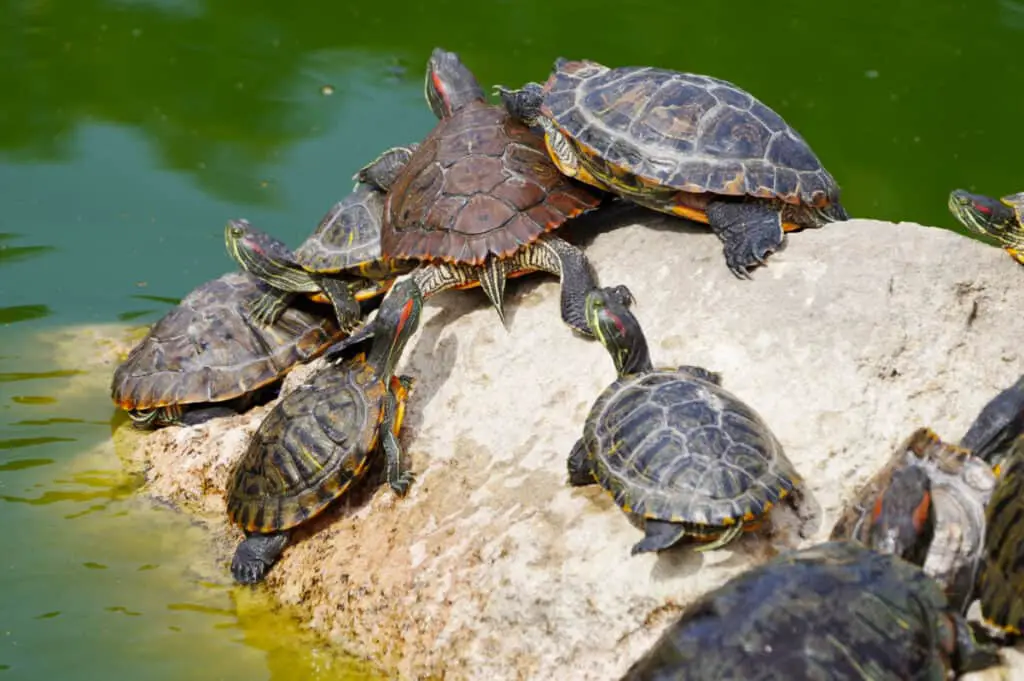
Why Do Turtles Eat or Bite Each Other?
Even though rare, it is still essential to understand why your turtles might bite or eat each other. Knowing the reasons can help prevent these sad incidents from occurring to your beloved pet turtle. Let’s look at some of the common reasons turtles show this kind of aggression.
1. Hunger
Pet turtles do not need to eat daily. Even in the wild, these animals at times go for several days without getting food. So a few days of hunger is less likely to make your pet eat another turtle. However, in cases of extreme hunger and survival is at hand, the turtle will eat any available source of food to survive.
When cannibalism occurs because of severe hunger, the older turtles often eat the younger ones.
2. Territory Protection
As with most wild creatures, turtles are pretty protective of their territory. Even in captivity, they still guard their place carefully. Turtles hardly allow other animals to get within their area. When another turtle enters their place, they might stop them by biting them. It also happens when other animals, such as crocodiles, try to invade the turtle’s space.
When you have two or more turtles in the same tank, they might become aggressive towards each other over territory. It is more common if the tank is too small and there is not enough room for your turtles to live happily.
3. Mating Rituals
It is common for a male turtle to bite the female before or when mating. The bites are often not serious, and they don’t result in wounds or blood-shedding.
In some cases, mating disputes can make turtles fight or bite each other. Such scenarios are more common if multiple male turtles are in the same enclosure. They might get aggressive and fight each other over the right to mate with the female.
4. Stressful Conditions
If the living conditions in your tank are not healthy, your turtles are likely to fight. An unhealthy environment subjects your pets to stress, making them aggressive and affecting their overall health. A stressed turtle might decide to take out their emotions on other turtles.
Another contributing factor to stressful conditions for turtles is when the enclosure is too small. If the turtles outgrow the tank size, the living conditions might become stressful. As a result, they might bite each other due to the small space size.
Having limiting amenities such as a small basking spot can also make turtles grow hostile towards each other when fighting for the same.
5. A Show of Dominance or Social Status
Most animals tend to have a show of dominance. In turtles, males often show power over their weaker fellows by biting them or shaking their claws. It is inherent in them to do so. The turtles that emerge stronger in these fights gain a higher social status.
6. Turtle Species Differences
Turtles are not social animals and often live a solitary life. Unlike pets such as dogs and cats, they don’t like being cuddled or touched for long.
Each turtle species has unique characteristics and traits that distinguish them from the others. Having two different turtle species in the same enclosure might mean that they will not get along. The result is that they might get aggressive towards each other and thus bite. Turtles are more likely to become aggressive towards those of other species than those of their species.
How To Keep Turtles From Eating or Biting Each Other
Your pet turtles eating each other is a sad event. It can be traumatizing not only to you but also to the victim turtle. Measures to reduce the chances of aggression are essential. They give you peace of mind that your pets are safe, and your turtles also get to have a fulfilling life.
Here are helpful tips for curbing aggression in turtles and preventing them from biting or eating each other.
1. Feed The Turtles Well
Extreme hunger can make turtles eat each other even in captivity. Give your turtles enough food. Other than some juveniles, most turtles don’t need to eat daily. Neglecting or starving the turtle will make them grow desperate. Desperation and the struggle to survive can make the turtle eat another turtle.
Identify the right feeding quantities and program for your turtle species and adhere to it. Most omnivorous species eat more meat as juveniles and shift to more plants as they mature.
In addition, give your pet turtle high-quality food. Different turtles eat different food types in the wild. Knowing the best foods for your turtle will ensure that you give them the nutritional value they need.
Proper feeding and an appropriate diet prevent the turtles from biting each other and ensure their health and overall well-being thrive. If you are feeding the turtles appropriately, they are less likely to bite each other.
If multiple turtles in the same tank are still aggressive during feeding, feed them separately. Provide the turtles with separate feeding dishes and monitor if aggressiveness reduces. Besides eliminating fights, it also reduces wastage and how much waste food goes into the water.
2. Provide Ideal Habitat
Having multiple turtles in a tank that is too small makes their living conditions unhealthy and stressful. It often leads to aggression, and your pet turtles might bite each other.
To curb this, keep your turtles in different tanks. It ensures that each turtle has their own space and don’t have to fight over territories. Doing so eliminates room for male-to-male turtles’ aggression which occurs even with turtles of the same species. In addition, it reduces the possibility of the turtles fighting over tank facilities such as basking spots.
If you decide to keep several turtles in the same tank, ensure that the tank is big enough for the two so that they don’t feel cramped. Experts recommend having a minimum of 10 gallons for every inch of the turtle shell. This tank size will be multiple the number of turtles you keep in the tank.
An ideal habitat includes giving your pet turtles a large basking area. These creatures require UV light for proper growth and need to bask for several hours daily. If the basking spot is too tiny, it will not accommodate all the turtles in the enclosure. Such conditions may make your turtles become aggressive towards each other and even bite while fighting for limited resources.
3. Avoid Keeping Multiple Male Turtles or Turtles of Different Species In The Same Tank
Even when there is enough space in the enclosure, male turtles might still be aggressive towards each other. Avoid keeping multiple male turtles in the same tank to remove the possibility of them getting aggressive over territories or mating rights.
In addition, you should avoid keeping turtles of different species in the same enclosure. Due to the differences in their traits, turtles of different species are likely to chase, hiss or even bite each other. The same species of turtles tend to be less aggressive towards each other.
Female turtles also tend to bite or hiss at each other less when put in the same enclosure.
The Most Aggressive Turtle Species
All turtle species can be aggressive or docile under certain circumstances. However, some species are more aggressive than others, and they are more likely to bite. Here are a few of the most aggressive turtle species.
The list will help you make decisions on keeping more than one turtle in the same enclosure and choosing the pet turtle to keep. It will also help you decide how safe it is to keep the specific turtle as a pet.
1. Sliders
Sliders can be aggressive, and their level of aggressiveness differs from one species to the other. Pond-eared sliders are known to be more aggressive than river cooters and red-bellied sliders. However, red-eared sliders are less aggressive; it is no wonder that they are one of the most popular turtle pet choices.
2. Snapping Turtles
Alligator and common snapping turtle species grow significantly big. They have a scary appearance and are some of the most challenging species to pet; you need extensive pet-keeping experience to pet a snapping turtle. Their jaws are strong and capable of amputating the human finger. These turtles can cause fatal bites on other turtles or leave you with serious bites.
Both snapping turtle species can become very aggressive. However, the common snapping species are more aggressive are they are often in water bodies such as lakes, ponds, and rivers hunting for prey and need to act fast and powerfully not to miss the prey. Alligator snapping turtles are less aggressive because they are not active hunters. They lay still in water and ambush prey that passes nearby.
3. Soft-shell Species
Softshell turtles are unlike most turtle species that are not aggressive towards their own. Softshells tend to be more aggressive towards each other than towards other species. As such, you shouldn’t pet softshell turtles in the same tank. In addition, they require more care and attention than most of the other pet turtles.
4. Box Turtles
Box turtles are terrestrial, and they have a highly-domed shell where they are able to retract their limbs, head, and tail fully. These turtles might not be as aggressive as the other species in this list, but when they have a very powerful bite.
The common eastern box turtle and Florida box turtle, which are subspecies of the common box turtle, are some of the most popular box turtle pet choices.
5. Musk Turtles
Musk turtles are common in captivity, and they can be pretty aggressive. The stinkpot and the razorback musk turtle are the most aggressive species. The bite of these innocent-looking creatures can be quite painful. As such, it is best not to keep a musk turtle if you have young kids.
6. Mud Turtles
Mud turtles have a close relationship with musk turtles and so are their aggressive characteristics. One of the most popular pet turtles is the common mud species, also known as the easter mud turtle. They have a sharp beak and a powerful biting force. Another aggressive but less known mud turtle is the scorpion mud turtle.
Least Aggressive Turtle Species
Captive-bred turtles are less likely to eat each other than wild-caught turtles. They are more friendly and calm around other pets and humans.
The least aggressive turtles kept as pets are Russian turtles and red-footed species. These turtles are even more docile and calm when bred in captivity. However, it is essential to note that, even though minimal, there is a chance that even these least aggressive turtles might bite under extreme conditions. So, measures should be kept in place with them too.
How To Train Your Turtles To Stop Biting
Turtles can also bite you, especially if trying to pick them or when you get too close. Even non-aggressive species can bite you if they confuse your hand or fingers for food. It is essential to train your turtles to stop biting each other or humans.
To prevent your turtles from biting, stop feeding them using your fingers. As such, they will not confuse it with food. Instead, put the food on a plate or feeding dish. Alternatively, you may use plastic or wooden tongs to feed your turtle. Avoid steel tongs as they can injure your turtle.
If the turtles are naturally aggressive, you may not do much in curbing them from being aggressive towards each other. The best you can do is avoid touching them, and that way, they will not bite you.
Frequently Asked Questions
Can Two Red-Eared Sliders Live in The Same Tank?
Yes, however, the tank should be big enough for both. Turtles can get territorial, but they are less likely to hurt each other with enough space. Ensure that you also provide them with enough food and facilities such as a basking spot, etc.
Do Red Eared Sliders Bite?
Most turtle owners would want to keep a red-eared slider owing to their adorable looks. Red-eared sliders are not the most aggressive turtle species, but they too can bite, and the bite can be painful.
Unless under extreme circumstances, red-eared sliders will remain friendly. Avoid keeping your pet in an unconducive environment, starving it, or keeping it with turtles of other species. When well taken care of and undisturbed, your red-eared slider is less likely to bite.
Why Do Turtles Bite?
Turtles bite other turtles for various reasons, including marking territory, hunger, living in stressful conditions, as a show of dominance, or as a part of mating rituals.
If the turtle is biting your finger, it could be because they are confusing it with food. It could also be because you are too much in their space. When their space is intruded on, the turtle is likely to get scared and might bite as a means of protection.
How Can I Treat A Turtle’s Bite?
If your turtle bites you, assess the seriousness. If the bite is not too deep and there is no skin laceration, then you can treat it at home. Use soap and lukewarm water to treat the wound. You may also take antibiotics.
If serious and excessively bleeding, perform first aid and immediately seek medical attention.
Conclusion
Turtles can eat each, but it is not a common occurrence. Cannibalism in turtles arises from extreme cases of hunger or aggression over fighting for limited resources such as the basking spot. Turtle bites are more common than turtles killing each other.
A turtle might also bite you, especially when they are starving or when they confuse your hand with food. Even though cases of turtles eating each other are not many, it is best to prevent this from happening, especially if you own more than one pet turtle.
Separating the turtles is one of the most effective ways of preventing turtles from eating each other. If you opt to keep them in the same enclosure, ensure that they have separate feeding dishes, a big enough basking spot, and the tank is big enough for both. With such measures, your turtles are less likely to eat each other.