Can a Bearded Dragon Pee Pink Fluid?
Because of the conditions in their original habitat, one of the bearded dragon’s adaptations is passing solid urine known as urate to conserve water.
However, the color and consistency of bearded dragon urine can tell a lot about its health. Bearded dragons’ pee may have transient pink color due to several reasons.
First, the pink tinge in the urine may result from the kind of food the beardie consumes. Eating highly pigmented food may cause your bearded dragon to produce brightly colored urine.
However, if the pee has pink and red tinges, this may indicate blood contamination, which is unusual.
The pink pee fluid may also be related to emotional or environmental stress. The temperature, humidity, and UV light can have much to do with the discoloration of the lizard’s urate.
Internal parasites and gut blockage can also lead to inflammation or infection, causing the bearded dragon to pass pinkish or reddish pee. When your bearded dragon keeps having a pink tinge in its urine, you must take action by visiting the local vet for examination.
Should You Feed Your Bearded Dragon A Pink Baby Mouse?
Being omnivores, bearded dragons can consume both animal and plant-based products. Besides feeding on plants, shrubs, seeds, and insects in the wild, beardies also hunt small animals that they can overpower.
Therefore, bearded dragons can be fed pinky mice with several caveats. Although there’s conflicting information online regarding whether pinkies are a healthy option for bearded dragons, the young rodents boast high fat, protein, and calcium content.
Pinky baby mice are tiny, have yet to develop teeth or claws, and can easily be savored by beardies.
However, only adult bearded dragons should be fed pinky baby mice. This is because only adults can digest pinky mice’s tough tissues and skeletal structures.
Still, adult bearded dragons shouldn’t feed on pinky mice regularly as they can lead to health issues such as gout and obesity.
Conversely, bearded dragons should not feed live pinkies. Live rodents can get aggressive and injure captive-bred bearded dragons.
Lizards should only savor frozen pinkies. Packets of frozen pinks are sold in nearly all reptile shops, and it’s up to you to choose the size and age that suits your bearded dragon.
What Do You Need For A Pink Bearded Dragon?
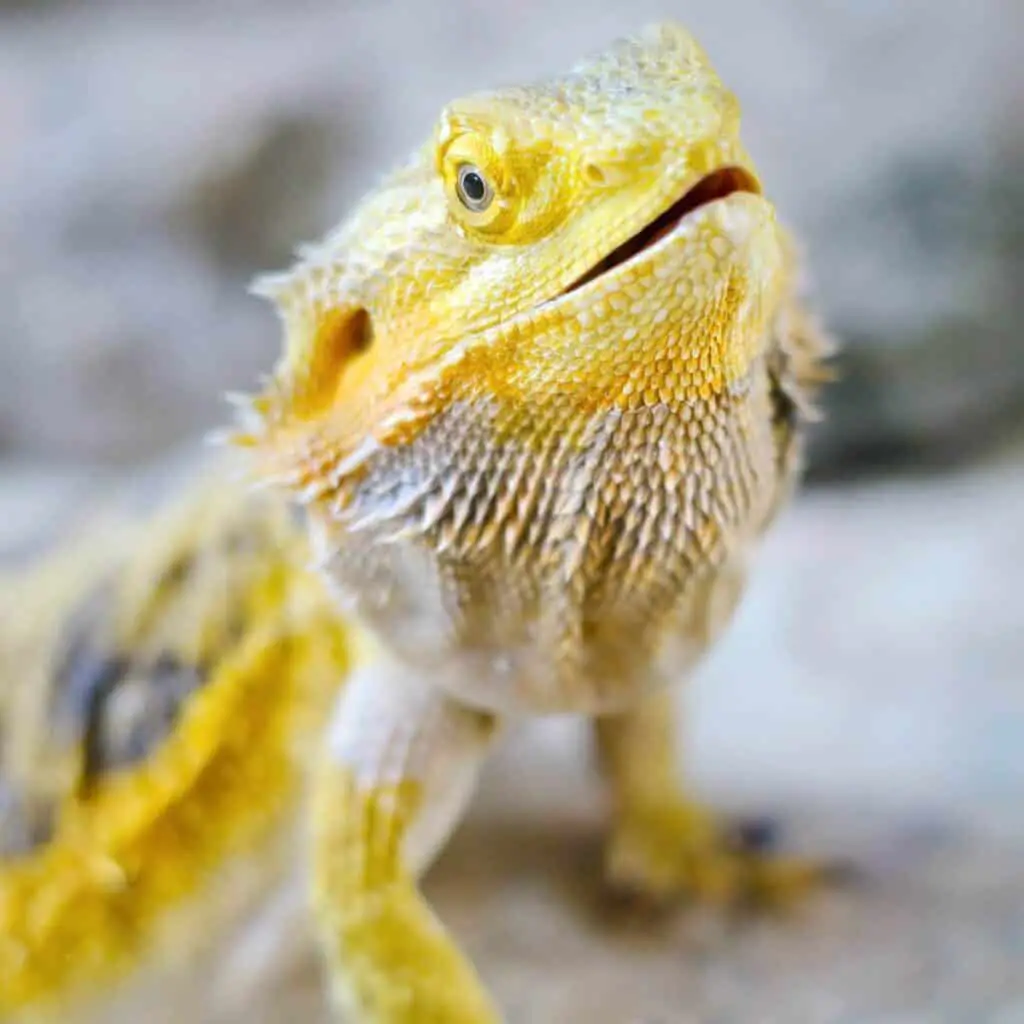
Breeders perform selective breeding to produce bearded dragon morphs with many color variations. This means that keepers can find beardies with a color of their choice. While brown is the most common bearded dragon color, you’ll still find unique hues such as yellow, pink, orange, and red.
A perfect example of pink bearded dragons are Hyponamelistic and Snow morphs that come in shades of pink, yellow, white, and lavender. Most bearded dragon morphs don’t have color patterns when aged below six. Their marks lighten up as they age.
Pink bearded dragons may be more expensive than the other morphs, but they don’t have peculiar needs beyond the normal.
Like the other lizards, pink bearded dragons will need a clean and safe habitat with all the right conditions, a healthy balanced diet, and an ultimate caring owner.
They need a tank size of 40 gallons or more, with designated basking and cooling area. The basking area temperatures should be around 95 – 105 ° F and 75 – 85 ° F in the cooler zone. The tank should have enrichments for exercises and engagement.
You should also provide them with a balanced diet containing fruits, vegetables, and insects. Some of their favorite insects include mealworms, crickets, wax worms, and small roaches. They also need clean drinking water.
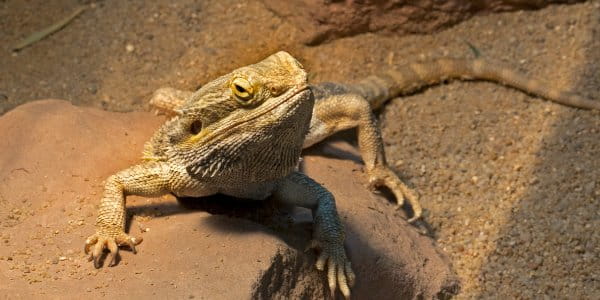
Why Is My Bearded Dragon Poop Pink?
As aforementioned, the bearded dragon poop color says much about its overall health and well-being. The bearded dragon’s diet might also cause temporary pink discoloration of the poop. When your bearded dragon eats colored veggies and fruits, there’s a high chance that it will produce pink poop.
However, if the poop has a mixture of red and pink tinges, this might indicate a health complication. It might stem from blood contamination, the presence of parasites in the gut, internal blockage, or intestinal damage.
Other aspects such as emotional and environmental stress might lead to your beardie pooping pink feces. If the discoloration is not caused by the food your bearded dragon is eating or internal health complications, it might be due to anxiety and stress.
Bearded dragons are highly prone to stress. Even the slightest thing can make them anxious and stressed. If your bearded dragon’s enclosure doesn’t have an optimal temperature, light, and humidity, the animal might get stressed and start producing pink poop.
Experts also claim that bearded dragons produce feces and urine with a pink tinge when they are about to lay eggs. This happens whether the eggs are fertilized or not. Are you still worried about why your lizard’s poop is pink? We hope this section has answered all your queries.
Why Is My Bearded Dragon Poop Red?
Like the pink poop, red bearded dragon poop can result from the food your lizard ate recently. For instance, if you feed your beardie on beets and raspberries, it might release red defecates. However, this should not be mistaken for bloody poop.
If there are traces of blood in a bearded dragon’s defecate, this indicates a severe internal ailment. If a beardy experiences a bloody poop once, this should not raise the alarm. However, you should consult your local reptile vet if it becomes a recurring trend.
Sometimes, the bearded dragon may consume food with sharp objects that tear the intestinal walls leading to internal bleeding.
Conversely, parasites such as Coccidia can rupture the gut walls, leading to traces of blood in the poop. A lizard suffering from parasitic infections will display other symptoms such as anorexia and lethargy.
Bearded dragon owners should not assume or dismiss the presence of blood in lizard’s poop. They should collect a stool sample and take it to the vet.
Only then will they be able to definitively know whether the bearded dragon has internal bleeding or parasitic infection.
What Does It Mean When Bearded Dragon Turns Pink?
Many keepers claim that their lizard’s skin would turn whitish or pinkish as they shed their skin. According to vets, the beardie skin may turn pinkish when the pet scratches itself against surfaces when it’s about to shed and during the shedding process.
When the bearded dragon scratches itself on hard surfaces, they injure its skin, causing a form of infection that manifests as a pink or red tinge on the skin. It can also be a form of fungal or bacterial infection.
Why Is My Bearded Dragon’s Poop Orange?
Bearded dragons may get orange poop due to several reasons. Bearded dragons will produce orange poop when they consume too many multivitamin supplements. A rule of the thumb is that you should only include a multivitamin supplement in a beardie’s diet once per week. The supplement should be sprinkled lightly onto the lizard’s food.
Also, dehydration may cause your bearded dragon to pass orange/yellow poop. The beardie’s poop may also be yellow/orange if the animal consumed colored foods.
Delicacies such as sweet potato, squash, and carrots can give beardies’ poop an orange tinge. An orange/yellow color on the poop can indicate that your female bearded dragon is gravid.
If you notice orange poop in your bearded dragon, give it a warm bath to help it hydrate. If it’s a female, prepare a nesting zone.
How Do You Hydrate A Bearded Dragon?
Dehydration is one of the most serious concerns for bearded dragons. Unlike cats and dogs that drink up when they get thirsty, beardies find it challenging to drink water from the bowl. Luckily, keepers can hydrate their bearded dragons in four simple ways:
1. Placing a water bowl in the terrarium
Although bearded dragons find it hard to drink from water bowls, you should place a shallow bowl with clean water inside the cage. If your beardie doesn’t drink from the water dish, try to provide some stimulation.
Keep the water on the cool side and place live insect feeders close by. The lizard will be tempted to drink the water if the insects escape into the bowl during the hunting process.
2. Giving your bearded dragon a warm bath
If your bearded dragon is dehydrated, the quickest way to hydrate the lizard is to give it a warm bath. While some bearded dragons enjoy bathing, others seem really distressed when dipped in water.
Bathing on its own allows beardies to draw moisture via the skin. Additionally, bearded dragons also drink water during bathing.
3. Misting the bearded dragon’s terrarium
For bearded dragons that won’t drink from the water dish, misting the surfaces inside its enclosure is the best alternative. Bearded dragons get their water in the wild by drinking leaf droplets.
Spraying the items in the bearded dragon’s tank, such as plants, allows these creatures to drink up in a fun way.
4. Hydrating through food
Since bearded dragons are not great drinkers, much of their moisture comes from food. You can help bearded dragons stay hydrated by feeding them vegetables and fruits with high water content, such as fresh watercress, capsicum, zucchini, and lettuce romaine.
Additionally, go for insect feeders that have high moisture content. If the food you’re offering doesn’t have enough moisture, misting will add the fluid level to the food. This is considered the best non-intrusive way to hydrate the scaly friend.
How Do I Know If My Bearded Dragon Has Parasites?
Wild animals are accustomed to living with parasites in or on their bodies. However, these parasites can sometimes expand to pathogenic levels, especially when the animals are brought into captivity. If you suspect your bearded dragon has parasites, check out these signs and symptoms:
1. Anorexia/reduced appetite
Healthy bearded dragons are the most voracious reptile pets. These creatures will devour vegetables and mealworms without stopping. If your bearded dragon doesn’t aggressively seek to savor its food, it might be due to a parasite load.
The parasites can irritate the lining of the digestive system and take up too much gut space eliminating bearded dragons’ high food drive.
2. Sudden weight loss
As the parasites increase inside the body, they start to compete for nutrients with bearded dragons. Furthermore, they lower the lizard’s food intake leading to unexpected weight loss.
3. Abnormal poop
Bearded dragons pass firm stool that’s brown to black with white urate. However, if the animal has parasites in the digestive system, the poop becomes watery, bloody, or mucus-laden.
The feces may also have a foul smell that doesn’t go away even after being cleaned.
4. Lethargy
Bearded dragons with parasite load will always look bored, inactive, and uninterested in whatever is happening around them. They will spend most of the time sleeping and won’t want to bask or eat.
5. Irritability and aggression
When infested by parasites, bearded dragons will repel any advances you make toward them. They will greet you with puffed-up beards, gaped mouths, and hissing sounds when you try to handle them.
Why Is There Blood in My Bearded Dragon’s Cage?
Like many other bearded dragon owners, you might be surprised to find blood in your lizard’s terrarium. The first thought is that the blood might have come from an injured body part. If accessories in the enclosure have sharp edges, they might have scratched the bearded dragon causing it to ooze blood.
If the blood is in the poop, this might mean that the bearded dragon has internal bleeding. This might be due to parasites, impaction, or gut infection. Bearded dragons might also be bleeding due to trauma caused by falling off high places.
Having blood in the bearded dragon’s cage should not be taken lightly. You should call your vet and try to figure out the problem.
Once the vet inspects the animal and the cage, you should clean the blood thoroughly since leaving it there may attract rodents that can harm your bearded dragon.
What Does a Bearded Dragon Urine Look Like?
Bearded dragons don’t pass fluid urine like humans and other animals. Instead of passing toxins and wastes in liquid form, the lizards release a dry, chalky substance together with the poop. Beardies release excretes from the kidney in the form of uric acid.
However, since the acid lacks the liquid part, it is released as a white substance appearing at the edge of the log-shaped stool. The amount of urine will vary from one lizard to the next, and factors such as age will also determine the amount of urine a bearded dragon will release.
Since beardies come from the hot deserts of Australia, where water isn’t readily available, one way they conserve moisture inside their bodies is to release urine in the solid form.
The white urate released together with the poop has a soft consistency. However, the urate becomes rougher than usual if a pet is dehydrated.
If your beardie releases harder urate, you need to hydrate its body by giving it a warm bath, putting water in the cage, misting, and serving succulent delicacies.
Why Did My Bearded Dragon Pee Liquid?
Although beardies don’t pass urine in liquid form, it’s not unlikely for them to release liquid pee. Occasional passing of liquid pee shows that your bearded dragon is overhydrated.
If your pet lizard consistently experiences runny or liquid pee, this is a sign of illness. Therefore, you should head to the vet if you notice that your bearded dragon has been passing liquid urine too often.
Sometimes, liquid urine and poop are because of diarrhea caused by gut infection.
Do Bearded Dragons Have Periods?
The short answer is, no, bearded dragons don’t menstruate. Although female beardies may be moody at specific periods, this has nothing to do with their menstrual cycle.
Only humans and animals that have a uterus can menstruate. Since bearded dragons fall in this category, don’t expect them to have periods at any time of the year.
Bearded dragons can become moody and aggressive when they are about to shed their skin. Also, these lizards will be less active if there’s a problem in the enclosure.
One of the reasons your bearded dragon may refuse to leave the cooler side is if the temperature in the terrarium is too high.
Does Healthy Bearded Dragon Poop Smell?
Smell tolerance differs from person to person; what you find smelly may not be for others. However, with that said, it’s essential to understand that bearded dragon poo has an easily identifiable odor. If a beardie poops in a room when you’re around, you’ll be able to know.
A healthy bearded dragon has a smell that is not as pungent as an unhealthy lizard. The odor of a healthy dragon’s poop will disappear after you clean the enclosure.
However, if a beardie is ill, its poop will have a foul smell that will linger in the cage for a long time, even after you have cleaned it thoroughly.
What Leads to Foul-Smelling Poop in Bearded Dragons?
Several situations can make beardie fecal matter smell awfully. Bearded dragons can have foul-smelling poop because of their diet. When you feed your dragons on crickets, there’s a high chance that they will release some smelly stool. Additionally, if the food a beardie eats doesn’t sit well, it will likely cause a stinky poop.
Another major cause of foul-smelling poop is parasitic infections. Parasites like pinworms and coccidian attach to the gastrointestinal tract leading to stinky-smelling fecal matter.
If the foul smell in the poop is occasional, you have nothing to worry about. However, if a bearded dragon consistently releases stinky poop, you should enquire whether it’s risky from your local vet.
How Do You Get rid of the Smell in a Bearded Dragon’s Poop?
Change the beardie’s diet to see whether the smell is caused by the food you’re giving it. Shun feeder insects like crickets and opt for insects that don’t make a bearded dragon’s fecal matter smelly.
If the beardie has stomach upsets, you need to change its diet.
If you suspect parasites cause foul-smelling poop, you’ll need to visit a local reptile vet. They’ll examine the fecal matter and recommend drugs to help control the parasites.
Is Bearded Dragon Poop Toxic?
Bearded dragon poop is not toxic nor venomous to human beings. However, despite looking healthy and clean, it carries salmonella germs and may have parasites like tapeworms. The germs are spread on all the surfaces inside the bearded dragon enclosure.
Humans can contract Salmonella by touching the bearded dragon or anything in its tank. For this reason, keepers must wash their hands after handling bearded dragons, play with them safely, and regularly clean their enclosure and accessories.
What Is The White Component In Bearded Dragon Poop?
The white component is urate, which is a bearded dragon pee. As mentioned earlier, beardies don’t pee liquid urine like other animals. Beardies’ urinary wastes are excreted as chalky white uric acid. Usually, a bearded dragon’s fecal matter will have two parts; the brown and white section.
The brown log-shaped part represents the excretion from the digestive system, while the white part carries the wastes from the urinary system.
How Often Do Bearded Dragon Poop?
A Bearded dragon’s pooping frequency will depend on its age. Younger beardies have more bowel movements than adult lizards. Baby dragons under three months can poop one to three times daily. This is mainly because their diet contains high proteins.
Beardies aged between four to eight months can defecate every single day. On the other hand, older lizards above eight months can have a bowel movement once or thrice per week.
However, like people, every dragon is different and might not conform to these schedules.
Conversely, the bearded dragon’s diet can significantly affect the pooping frequency. Lizards that consume too much calcium are likely to have more bowel movements.
Can My Bearded Dragon Poop on Me?
Yes, nearly all new pet owners have had their bearded dragons poop on them. However, the main reasons for beardies pooping on their keepers are contradictory. You lizard can poop on you when it is stressed, frightened or when it gets comfortable.
Usually, beardies will poop on you if you don’t keep a regular feeding routine. Although this happens as an honest mistake, over time, the beardie will learn to poop in the designated areas, and the accidental poops will seize.