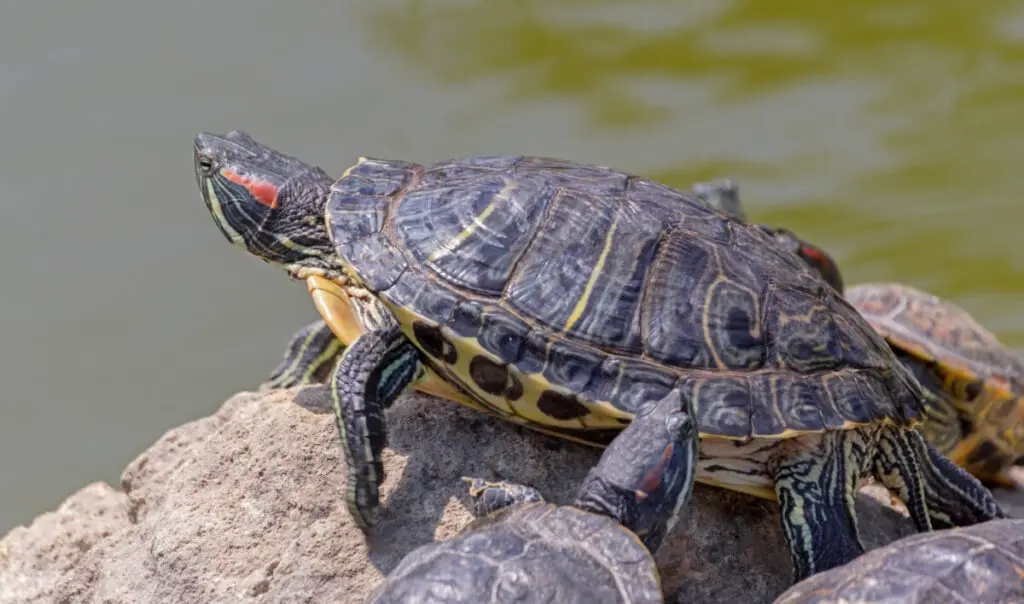
Basking is very important for the survival and thriving of aquatic and semi-aquatic turtles. If you are a pet turtle owner, you know just how important it is to provide the turtle with a basking spot to give it ideal living conditions. But if you have done so and your pet turtle is still not basking, you are bound to wonder;
Why is my turtle not basking?
Your pet turtle might fail to bask for several reasons, including a new environment, stress, illness, being scared, unaccessible basking spot, among other reasons. Identifying the reason will help you know how to encourage your pet turtle to start or resume basking.
Basking provides your turtle with UV-A and UV-B light. The light helps the turtle with digestion, heat absorption, mood regulation, stimulating Vitamin B 3, and temperature regulation, among other benefits. The basking light also helps dry the turtle’s shell. It is an important function as failure to do so can make your pet turtle develop illnesses such as shell rot.
Let’s have an in-depth look at some of the major reasons why your turtle is not basking and how to encourage your turtle to bask.
Reasons Why Your Turtle Is Not Basking
1. New Environment
Have you just acquired the turtle? Or have you changed the turtle’s environment? If yes, it might be the reason the turtle is not basking.
If the turtle is new to a tank, it might not bask as it has not yet become comfortable. With time, the turtle will start exploring the new environment, and once comfortable, it will occasionally go to the basking spot till they settle fully in the new habitat.
Do not panic if the turtle only skips a few days of basking in such a case. Your pet will be fine; it just needs time to adapt to the new habitat.
2. Improperly Placed Basking Area
If the basking area is not well placed, this could be another reason why your pet turtle is not basking. A basking area that is too steep will not be easily accessible to the turtle, thus discouraging your pet from basking. In case you have a steep basking spot, find a suitable ramp to make it easy for the turtle to climb.
In addition, a basking area that wobbles and is not stable can discourage your turtle from basking. Check the stability of the basking area to ensure that it has enough grip and establish whether this is why your turtle is not basking.
3. Stress
It might be a little surprising, but yes, turtles do get stressed. In fact, turtles can get stressed pretty easily. It often happens if their living conditions are not conducive, e.g., when the tank is too small or dirty.
The turtle might also get stressed if they are starving, sick, or their environment is constantly noisy, fights with other turtles in the same enclosure, poor handling, excessive touch, or other pets continually trying to get into the enclosure.
If you identify factors in the turtle environment that are likely to stress you as the owner or any other human being, then these factors are also likely to stress your pet turtle. Identify such factors, eliminate or reduce them and see if the turtle improves by starting to bask. Other indicators of stress in the turtle include poor feeding and withdrawn behavior.
Prolonged stress not only discourages the turtle from basking but can also make the turtle sick.
4. Basking Temperature Is Too Cold Or Too Hot
Different turtle species have different basking temperature requirements. A basking temperature that is too high or too low will discourage the turtle from basking. Your pet may opt to remain in the water where the appropriate temperature is.
Turtles are cold-blooded and thus, unable to regulate their body temperature. You need to get an external source of heat with an ideal temperature. If it is too hot, your turtle might get burnt and thus discouraging it from basking. If it is too cold, the turtle will remain in the water where it is warmer.
5. Not Knowing The Turtle’s Basking Environment
In addition, you might not be aware of how your turtle prefers to bask. While some species prefer to bask outside water, some prefer to do so inside.
Some species, such as painted turtles, opt to bask on floating items, while others, such as the red-eared sliders and loggerhead species, prefer basking while floating on water. Other species such as the map turtles and green sea turtles like to bask in a dry area or on the shores, so you need to provide them with a large dry basking platform.
If you are not aware of the environment within which your turtle prefers to bask, you might not provide it with the appropriate basking tools. As such, your pet turtle might not bask. In addition, your pet turtle might be basking, but you will think that it is not because you are not aware of the environment it basks in, especially if it floats on water to bask.
6. The Turtle Is Scared
If your pet turtle is new to the home, it might get scared before adjusting. Your turtle might also be scared of other pets such as cats, and dogs are constantly trying to disturb it through the glass aquarium. Another reason the turtle might be scared is if it is being bitten or facing aggression from another turtle in the tank.
A scared turtle will have withdrawal signs. It will stop all activities, including eating and basking, till it calms down. Allow the turtle time to adjust. But if they are multiple in the tank, it would be best to remove one or use a tank divider to separate the turtles.
7. Pregnancy
Turtles lay eggs. A pregnant female turtle will have a weird behavior. It will stop eating to prepare to lay eggs by digging and preparing the nests.
Turtles do not lay eggs in water and instead do so on land. Thus, a tank is not an ideal area for laying eggs. A pregnant turtle will scratch the glass and make all attempts to get out of the enclosure to lay eggs. It will withdraw from all activities, including basking in search of nesting grounds.
Besides not basking and eating, other signs that your turtle is pregnant include becoming significantly aggressive, the inner part of the legs will become white, and frequent attempts to get out of the tank. If you notice such acts, pregnancy might be why your turtle is not basking.
8. You Are Missing Seeing The Turtle Bask
Another reason why you may think that your turtle is not basking is if it is doing so when you are not watching.
Though rare, you might miss seeing your turtle bask if you have been on a busy schedule and frequently away from the view of the tank. It might also happen if the turtle is scared and only basks when no one is around.
Naturally, turtles may hide when they spot another creature as a defense mechanism. If your turtle does not distinguish the captive environment from that in the wild, it will go back into the water when you enter a room. Turtles have a good sense of vision; they will notice human movement.
To verify this, leave a live filming camera or phone in the turtle’s area for an entire day and check to see if your pet did bask. If it does bask, then there’s no reason to worry, but if it doesn’t, you need to look through the other above reasons to establish why your pet turtle is not basking.
Effects of a Turtle Not Basking
We have seen possible reasons why your turtle might not be basking. But you might be wondering why is basking necessary? What happens if my turtle does not bask?
A turtle that does not bask for a few days and is not hibernating will not be affected. However, if your turtle goes for a prolonged duration without basking, then it might suffer from severe effects. Here are some of the common health effects of a turtle not basking.
- Shell Rot
- Digestive Problems
- Shell Distortion
- Loss of Appetite
- Poor or no defecation
How to Encourage Your Turtle to Bask
Your turtle needs to bask frequently for its health to remain optimal. How long a turtle basks depends on its age, species, humidity, and temperature in the enclosure. Some will bask for two hours daily, while some may bask for much longer.
If you notice that the turtle is not basking, you need to encourage it to do so. Here are some effective measures on how to encourage your turtle to bask.
1. Provide Ideal Living Conditions
If you want your turtle to bask frequently, then you need to ensure that the living conditions are ideal.
Provide the turtle with an appropriate basking area that is big enough to accommodate the turtle’s body size and weight. The basking area should also be stable enough to ensure that the turtle doesn’t get scared from the basking spot wobbling. Some basking spots come with a grip tape on the four edges to ensure that the place remains stable.
2. Appropriate Temperature
Different turtle species have varying temperature preferences for the basking area. Establish the needs of your turtle species and set up the basking lamp to provide this. Water temperature also affects the basking of a turtle. When it is too cold, the turtle becomes sluggish and will not bask.
In general, the basking area should have a temperature of between 90 and 95 degrees Fahrenheit. That of the tank water should be lower to help the turtle cool off when need be. Ideally, the water temperature should range between 78 and 80 degrees Fahrenheit for juveniles and 75 and 78 degrees Fahrenheit for adult turtles.
Besides providing the appropriate temperature, ensure that the temperature does not keep fluctuating too much. Doing so will at times expose the turtle to too hot or too cold temperatures, which might deter your pet turtle from basking.
3. Properly Position the Basking Spot
Place the basking spot on one end of the tank. It ensures that the tank water has a warmer and cooler side. While some people place the basking area in the middle, it does not give the turtle access to a warmer side of the tank.
The basking area should also be above the tank water. It ensures that the turtle’s shell dries as it basks. Another vital thing to do is ensure that you provide the turtle with an easy-to-use ramp if the basking spot is too high. A ramp will make the basking spot easily accessible, thus encouraging your turtle to bask.
4. Properly Position the Basking Lamp
The UV light source needs to be above the basking area to ensure an appropriate heat supply for the turtle. Position the light to be high enough and out of reach by the turtle to avoid burn accidents. It is more necessary if you have multiple turtles in the tank of species that like basking while stacking on each other.
Some heat lamps and UV light bulbs are not explosion-proof, so you need to ensure that it is out of reach of water in case of splashing. Leave the lamp on for 10 – 12 hours and switch it off during the night. Some lamps produce light, which can interfere with the turtle’s sleep if left on at night.
Appropriately positioning the basking area and lamp ensures that the turtle gets comfortable and has easy access to asking whenever it needs to.
5. Place Food In the Basking Area
Food can act as bait to get your turtle to bask. Place the turtle’s favorite treats on the basking area to encourage them to come to the spot. They might associate basking with food, but it will also help you get the pet to bask.
6. Don’t Bother the Turtle
Turtles do not like being touched a lot. They are unlike other pets and prefer to be left alone. Excessive handling can make your turtle stressed, leading to the turtle not basking.
Avoid bothering the turtle, especially when basking. It might get uncomfortable and associate the basking area with the uncomfortable experience. Leave your turtle alone and only handle it when necessary.
Putting in place these measures will help your turtle resume or start basking. It might not happen overnight, and you need to remain consistent and patient, especially if the environment is new for your turtle. For ultimate results, first, establish the underlying reason why the turtle is not basking. It will help you choose the ultimate set of measures to use.
Frequently Asked Questions
What Will Happen If My Turtle Does Not Bask?
In the wild, turtles bask directly from the sun. It is vital for their survival and well-being. Sunlight helps them absorb heat and UV light from which they get the crucial Vitamin D. It also helps them with digestion and drying out.
If your pet turtle does not bask, it will not get the above benefits. The result is that the turtle is likely to suffer from digestive problems, low bone density, and shell problems, among other severe effects. Ensure that you provide your turtle with a heat lamp and encourage it to bask.
How Long Should a Turtle Bask?
There’s no perfect answer to how long a turtle should bask. It mainly depends on the species as some bask for 2 hours while others bask for up to 8 hours daily. These reptiles will bask for as long as they need to. If your turtle is basking, then you should not worry too much about how long it does so.
Other factors that determine how long a turtle basks include its age, the water temperature, basking area temperature, and humidity.
Can a Turtle Bask Too Much?
Turtles bask on a need basis. So it might be hard to tell if your turtle is basking too much. However, if it spends several days in the basking area instead of hours daily and doesn’t go into the water, then it might be basking too much.
Some of the common reasons your pet turtle might be basking too much include water irritation because of unideal pH, sickness, too low water temperature, parasitic infections, or bullying by fellow turtles in the tank.
Conclusion
Basking is vital for turtles. It helps them dry out, thus preventing shell problems and enabling their body to access the vital UV-A and UV-B light. In addition, it enables these cold-blooded creatures to regulate their body temperature.
If your turtle has not been basking for several days, you need to establish why. Check the environment and living conditions to eliminate illness as a cause. If unable to identify why your turtle is not basking, you need to consult a vet.
There are several ways to encourage your turtle to bask, and they include providing the right living conditions, an easy-to-access basking spot, and an ideal temperature. We hope that this will help you identify and rectify why your pet turtle is not basking.