There are many different types of bearded dragons, and each has its own unique set of characteristics. Some are better suited as pets than others, so it’s important to choose the right one for you. Here is a look at the different types of bearded dragons and which ones make the best pets.
Bearded dragons are grouped into different categories depending on the species or morph. Depending on various factors, some make better pets than others.
Personality, appearance, care requirements, and health status are some factors to look out for when making a decision. Below we explore the different bearded dragon species and morphs.
9 Types Of Bearded Dragon Species
Although all bearded dragons are initially from Australia, each species occupies a distinct habitat. Below is a look at each, their habitat, and what sets them apart from the rest, including the size these reptiles are expected to grow to.
1. Pogona Henrylawsoni
Also referred to as Lawsons, Rankins, dumpy, dwarf, black-soiled, or pygmy bearded dragon, this species is more friendly and are active climbers. They hardly grow big, only measuring 12 inches when fully grown. Their main colors are yellow or tan.
Pogona Henrylawsoni is a great pet lizard choice for those who wish to recreate a desert region habitat for the pet or those who live in the desert.
They are common in Western and Central Australia, with a great preference for dry and hot landscapes with many rocks.
2. Pogona Barbata
Also known as Eastern or Coastal bearded dragon, this species grows very big, reaching 2 feet in length. Their native environment is arid, forested areas, making them more active during the afternoon during the warmer daytime hours.
They tend to be aggressive and territorial because of the scarcity of resources in their natural habitats. In addition, they climb more than the other bearded dragon species because their habitat has plenty of densely wooden places.
3. Pogona Microlepidota
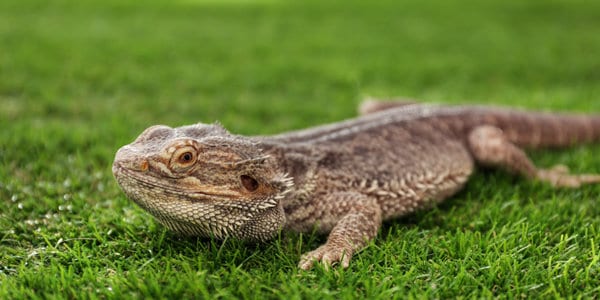
This small bearded dragon species is also known as Drysdale or small-scaled bearded dragon because they grow to between 4 and 6 inches long.
Pogona Microlepidotas are quite rare in their natural habitat and in pet stores. Their natural habitat is in the woodlands and the coast of Northwestern Australia.
4. Pogona Nullabor
This bearded dragon species gets its name from its primary habitat, which is Nullabor Plain in Australia, preferably the areas with plain bush cover.
They grow to about 14 inches and have spines on their sides. Its most unique features are the big, dark horizontal stripes banding its back and tail.
5. Pogona Vitticeps
Also known as the Central or the inland bearded dragon, Pogona Vitticepsonly inhabits Central Australia. They are common in deserts and woodlands and love to climb.
In addition, these bearded dragons have a docile, friendly demeanor which is why they are the most common bearded dragon species kept as a pet.
When mature, Pogona Vitticeps get to around 2 feet long. They have a brown or yellow color.
6. Pogona Vittikins
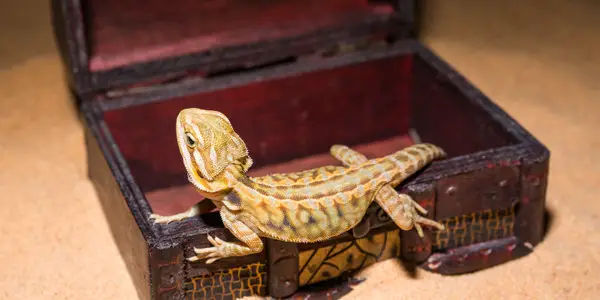
Pogona Vittikins is the most recent bearded dragon species to be discovered. They are a natural crossbreed of P. Henrylawsoni and P. Vitticeps.
They attain a length of about 12 inches and have an ideal temperament making them a good pet choice.
7. Pogona Minor Minima
Yet another tiny bearded dragon species, we have the Pogona Minor Minima, also known as the Western bearded dragon. When fully grown, they get to around 12 inches in length.
Their natural habitat is only in the dry woodland areas of 3 Western Australia islands with a preference for areas with a sparse human population.
8. Pogona Minor Minor
Pogona Minor Minor grows to a length of between 14 and 18 inches. They are also referred to as Dwarf bearded dragons because of their medium size. Just like the Pogona Minor Minima, this species is quite rare.
A dry, rock, and woodland area is their preferred natural habitat. As such, you will likely find them in Australia’s central and western parts.
9. Pogona Minor Mitchelli
This beardie species grows to around 18 inches and are also known as Mitchell’s bearded dragon. Their native habitat is in the desert and tropical woodlands of the northwestern part of Australia.
However, Pogona Minor Mitchelli are becoming scarce due to human invasion of their habitats.
11 Bearded Dragon Morphs
The term morph, also known as mutations, refers to the patterns, shape of head and body, scales, spikes, size, colors, and nail and eye color.
Different bearded dragon morphs vary in these aspects, especially color, but some morphs might share elements such as head shapes.
Genetics is the primary determinant of the various bearded dragon morphs we will look at below. Breeding beardies with a set of distinct recessive or dominant genes give different morphs.
Some morphs are pretty expensive, especially the least common ones. Let us review some of the most common bearded dragon morphs.
Classic or Standard Morph
Standard or classic bearded dragon morph is the most common one. It is the most similar to wild ones, with a big triangular head and small spikes on the body and beard.
They differ in colors, with the common ones being yellow, tan, and red with orange and black marks.
If you are looking for the most affordable bearded dragon morph, then it is this standard one.
Leatherback Morph
The key distinguishing feature of the leatherback bearded dragon morph is that it has no scales or spikes on its back, making it have a smooth back. However, the sides and head are not smooth and instead do have spikes.
Due to the smooth back, their colors appear brighter than those of other bearded dragon morphs. The colorful appearance makes the leatherback morph one of the most popular.
Hypomelanistic Morph
This bearded dragon morph is known as hypomelanistic, meaning that they have less than average color. It is because they have below-normal levels of melanin which is the one that gives color to scales and skin.
Hence, these bearded dragons are often light-colored due to their inability to produce dark markings and patterns.
Hypomelanistic bearded dragon nails are clear, and their bodies are often muted in color. On the other hand, their spikes patterns look like classic morphs.
Translucent Morph
This bearded dragon has transparent scales and spikes, hence the name. In most cases, they are hypomelanistic but can also be other colors or patterns.
Their color is also lighter than the other breeds, with the babies having a belly that is almost clear blue. Even so, this blue color fades as they age.
The eyes of the adults are dark without a visible iris, and the eyelids are, at times, blue. These distinct eyes are the distinguishing feature of the translucent bearded dragon morph.
Silkback Morph
Also known as scaleless or silkie, silkback bearded dragon morphs have no scales making them look like that of most amphibians. Instead, the beardie’s skin is smooth and soft with bright colors. Their colors appear more vibrant because no scales and spikes cover them.
On the downside, the absence of scales makes silkback morphs quite delicate, and they can be easily injured since the scales offer protection.
Should you choose this morph, you need to provide it with extra skin care, lighting, and habitat setup attention.
Zero Morph
The outstanding feature of the zero morph is that it lacks the patterns associated with bearded dragons. Instead, they have a silver or gray color, with the high-quality ones looking more like pale silver or white. Inferior quality ones appear muddy brown, and they have big gray splotches.
All zero-bearded dragon morphs have dark eyes and are recessive. Some breeders cross these zero morphs with leatherback morphs giving them tiny scales and a smoother but patternless look.
Zero morphs are quite expensive because of their unique appearance and because they are rare to find. They cost as much as more than $500.
Paradox Morph
Yet another rare and expensive bearded dragon morph, we have the paradox. Unlike the typical bearded dragon, whose back and tail have a pattern resembling banded colors, the paradox morphs have a unique, rare one that appeals to most bearded dragon enthusiasts.
These lizards have several irregularly brightly colored patches on their bodies, resembling paint splash. They get the name paradox from how different and irregular their patterns appear.
Although unique, this morph is not frequently reproduced by breeders making some people not regard them as a true morph.
Witblits Morph
Witblits morphs are more muted than hypomelanistic, but they are not a zero. In most cases, they are considered a sub-category of hypomelanistic.
They have a pale color, often dull, light gray, or tan but never white. In addition, they are patternless. Depending on the breeder, witblits morphs are available in distinct solid colors.
Wero Morph
Not to be confused with the Zero Morph, we have the Wero Morph, which is a crossbreed between Witblits and Zeros.
They resemble the Zero morphs but have the dark coloration of scales near the tail’s base and on the sides. Some are also patternless with black eyes and a silver-white color.
German Giant Morph
This morph resembles the standard bearded dragon, not until they are mature. They are the largest type of bearded dragon morph, growing to a length of more than 16 inches.
In addition, these German giant morphs lay many eggs per clutch and are often aggressive. Once mature, you might need to change the enclosure to a bigger one to avoid stressing the animal.
Microscale Morph
Microscales have tinnier and smaller spikes than the standard bearded dragon. These spikes are only on their beard and head, making the lizard have significantly brighter colors.
Best Bearded Dragons That Make Good Pets
As is evident, there are many bearded dragon species and morphs to choose from.
1. Pogona Vitticeps
Pogona Vitticeps is the most popular bearded dragon species. They are pretty hardy, calm, and docile, making them a good choice for captivity. You certainly don’t want to deal with an aggressive bearded dragon. In addition, they have a long lifespan and are readily available.
However, you would need to get a big enclosure since these pets grow to about 2 feet when mature making them one of the biggest bearded dragon species.
You get to choose from yellow, tan, or brown ones with orange or red markings. They may also be available in other colors because of selective breeding.
2. Pogona Vittikins
Pogona Vittikins is another bearded dragon species that makes a good pet. They have a calm temperament and hardly grow to more than 1 foot, making it a more suitable choice if you do not want one that grows as big as Pogona Vitticeps.
3. Pogona Henrylawsoni
Pogona Henrylawsoni is also another good choice, especially if you intend to create a desert-like enclosure with plenty of rocks.
Tips To Finding The Best Pet Bearded Dragon
Once you identify the bearded dragon species or morph you want, the next step is choosing the pet itself.
A good bearded dragon pet does not depend on the species only; you also need to choose a good source, ideal age, and good health status. Here are tips for selecting the best bearded dragon pet for your home.
Research
It might sound obvious, but this is a critical step in ensuring that you get a bearded dragon ideal for you.
Educate yourself on the available options, colors, care requirements for the specific species, etc. Doing so helps you choose one that meets your expectations, and you do not end up with a beardie you cannot care for.
For instance, some morphs are very delicate and require extra care and attention, which you might not be able to provide depending on your schedule.
Healthy Bearded Dragon
Irrespective of the type of bearded dragon you choose, it will not make a good pet if it is not healthy. The best should be active and alert. It should not have any signs of lethargy, illness, or sluggishness.
To ensure the lizard is healthy, examine it for missing body parts such as toes, runny or sunken eyes, visible injuries, puss in any openings, or any sign of trauma.
Where To Buy
You are more likely to get a healthy bearded dragon from a breeder than from a pet store. Breeders give these reptiles the best environment besides rearing them together with fellow beardies.
Thus, the reptiles are less likely to get injured by other animals, be sick, or be stressed. You are also likely to get rare morphs from breeders than from the local pet store.
The best beardie breeder is reputable and ethical. You want to deal with someone who breeds the reptiles well and provides a conducive environment for them. In addition, the breeder should not illegally capture wild bearded dragons for breeding or sale.
If getting the pet online, bear in mind that lighting affects the colors, and the pet you receive might not look as it does exactly in the photos. A live video can help you get a better picture of what you are about to purchase.
Baby Or Adult Bearded Dragon
The choice depends on your needs, but if you are a first-time beardie owner, it is best to choose one older than half a year since they are not as vulnerable.
Young bearded dragons require perfect husbandry and tender care to survive and thrive. Even so, mature bearded dragons can be intimidating for first-time keepers.
Juveniles are an excellent choice for first-time owners; they are neither too delicate nor intimidating.
Frequently Asked Questions
Which Is The Cheapest Bearded Dragon?
The classic or standard bearded dragon morph is the most affordable. They resemble those in the wild in appearance, shape, and size. Even so, some are more expensive, such as those with bright colors, orange or red hues, or tiger patterns.
Which Is The Most Popular Bearded Dragon?
The most common bearded dragon species is Pogona Vitticeps. Their general nature, i.e., calm, hardy health, and docile, makes them a good choice for captivity. Classic or standard morph is the most common one and they resemble those in the wild.
Do Bearded Dragons Make Good Pets For Beginners?
Yes, bearded dragons are good pets for beginner reptile owners. They are not very delicate past a few weeks old and do not require much care compared with other fragile pets. In addition, these lizards are not as susceptible to many illnesses.