No, it is not wrong to wake up a sleeping bearded dragon as long there are good reasons for it. However, doing so interferes with their sleep pattern, and the pet might take longer to fall back asleep, or they will wake up later than they often do. Repeatedly waking up a bearded dragon can significantly affect the pet’s sleep quality, affecting its overall health.
Some of the circumstances that might necessitate waking up a bearded dragon include giving it medicine, cleaning the enclosure, bathing the pet, or checking on it if it is unwell.
You might also need to wake up your beardie if it has slept for significantly longer and you are concerned that something might be amiss.
Bearded dragons are diurnal reptiles, meaning that they sleep at night and are most active during the day, irrespective of whether they are in the wild or captivity.
However, some beardies also tend to nap during the day, but it might be a point of concern if it sleeps too often during the daytime.
Being diurnal is vital for these lizards for several reasons. First, it ensures that they are not prone to predation as most predators are active during the day. It also enables them to get heat because they are cold-blooded.
Another reason why bearded dragons need to remain active during the day and sleep at night is that it aids their chances of catching prey or getting food.
Sleep is vital for a bearded dragon. It allows their bodies to rest after the day’s activities. Even in captivity, where they don’t need to hunt or look for food, a bearded can still get tired. These lizards are active and will move around the tank quite often.
Sleep is also crucial as it allows room for growth, development, and rejuvenation of body cells.
Is It Okay For My Bearded Dragon To Sleep During The Day?
Yes, It is nothing to worry about as long as your beardie is healthy, not hungry, and the living conditions in the tank are correct. In general, beardies sleep at night and are active during the day. However, this may vary as some bearded dragons tend to sleep during the day as well.
Daytime sleep duration should be short, but there might be a significant problem if the pet sleeps all day. It might be a health issue, or the pet’s enclosure conditions might not be correct.
It would be best if you found the underlying cause to help your pet resume its optimal quality of sleep and life.
10 Reasons Why A Bearded Dragon Is Sleeping All Day
1. Brumation
Brumation occurs in winter; it is a state of inactiveness these reptiles enter to conserve energy during this cold period. Brumation is like hibernation. Bearded dragons start to brumate after turning a year old.
A beardie preparing for brumation will show signs of inactiveness, including sleeping all day, not moving, eating less or not eating at all, not basking, and hiding.
There is nothing to worry about if your pet is preparing to brumate. The process is natural, and you should help it prepare by providing a constant supply of clean water and maintaining cleanliness in the enclosure.
2. Illness
Although bearded dragons are hardy pets, they are still susceptible to some illnesses. The most common diseases in bearded dragons include respiratory problems, parasites, adenovirus infection, sunken eyes, metabolic bone disease, and mouth rot.
Depending on the severity of the symptoms, some of them make the pet withdrawn, thus sleeping during the day.
If your bearded dragon is sleeping all day, losing weight rapidly, shaking or wheezing, it might be sick. Contact your vet if your beardie sleeps all day and shows the above signs.
3. Impaction
Impaction occurs when the bearded dragon ingests particles too big to be digested or indigestible materials that are too big to pass through the pet’s digestive system.
It can also occur if the lizard consumes fat-rich foods. The condition can be pretty painful and uncomfortable for the pet.
An impacted bearded dragon will remain in one place and hardly move around. It is also likely to sleep all day due to discomfort and inactiveness.
If your beardie suffers impaction, bath it, rub its belly and contact a vet if there is no improvement.
4. Low Temperatures
Bearded dragons do not regulate their body temperature; they lack the mechanism to do so. Instead, they rely on the external environment to get warmth and keep their bodies at the ideal temperatures.
Low temperatures in the basking area and other parts of the tank can make the pet sleep during the day because its body does not have the appropriate warmth to remain active.
5. Poor UVB Lighting
Bearded dragons need UVB lighting in their enclosures. Their wild environment is quite sunny, and their bodies are adapted to high mounts of UVB rays. If you do not provide UVB lamps or choose lamps that are not producing enough UVB rays, it will affect your pet lizard.
UVB rays help the pet with Vitamin D absorption, promoting calcium absorption. Low calcium affects a bearded dragon’s bone health and various organ functioning. When the pet’s health is affected, it might sleep during the day.
6. Stress
Bearded dragons can get stressed for several reasons such as not having enough space in the tank which can cause stress marks on their skin.
7. New Environment
Relocating your beardie into a new location can cause them disturbance. They will need some time to adjust to the new environment and get back to their usual habit. Just give your pet some time.
8. Dehydration
Its important to keep your bearded dragon hydrated all the time. Keep a source of water in their tank to avoid getting it dehydrated which can cause a lot of problems.
9. Undergoing a Growth Spurt
During the growth phase of your bearded dragon, it may sleeps more than usual as they need it to get their energy back.
10. Hunger
Not feeding your bearded dragon enough and meet its nutritional requirements can cause many problems and diseases in your pet. You may notice your beardie not active as usual, sleeps a lot, and losing weight.
Is It Good If Your Bearded Dragon Sleeps On You?
Yes, a bearded dragon sleeping on you shows that it is comfortable around you. It is also a sign of trust which should make you happy as bearded dragon owner. Therefore, it is okay to let your bearded dragon sleep on you as long as it is comfortable.
A bearded dragon might also sleep on you because it enjoys the warmth of your body. These reptiles rely on external factors to regulate their body temperature. It should be a good thing to help your pet get the heat they need.
It might be tempting to carry the sleeping beardie to your bed. But this is not a good idea. The risks outweigh any benefits, as the pet might suffocate if you accidentally roll over and lie on it.
In addition, the bearded dragon might fall from the bed and sustain injuries. It might also mess up your bed, something you certainly don’t want to deal with.
A bearded dragon sleeping on you is good as long as you are lazing around and there is no risk of the pet falling.
Do Bearded Dragons Yawn When They Wake Up?
Some bearded dragons yawn when they wake up. It might happen occasionally and often looks like the lizard is puffing up its beard and then opening and closing the mouth. Yawning is normal for bearded dragons, and you should not worry about it.
Yawning in bearded dragons is different from gaping because the latter means that the beardie keeps its mouth open.
Gaping is a mechanism through which the lizard regulates its body temperature. A gapping beardie will often sit in the cooler part of the enclosure. It is also a self-defense mechanism to scare predators.
How Do You Wake Up A Bearded Dragon?
Waking up a bearded dragon can make it aggressive or startle it. The effects might be long-lasting if you repeatedly do so. Here are tips to guide you on correctly waking up your pet lizard.
1. Knock The Enclosure
Bearded dragons are sound-sensitive. It is vital for their survival in the wild as it helps them detect the presence of a predator or prey. Knocking the enclosure creates sound vibrations in the habitat, and this is likely to wake up the bearded dragon. Be gentle and only increase the knocking if the pet does not wake up quickly.
2. Spray The Tail
Next, spray the pet’s tail with water to fully wake it up and make it alert. Avoid spraying other body parts, such as the eyes, as it may lead to health complications, especially respiratory-related ones.
3. Observe The Pet
Once fully awake, you may proceed to observe your pet or give it medication. Depending on your feeding schedule, you may also provide food to keep it active.
Ensure that the bearded dragon is fully alert before doing this because it may spark aggression in the pet. An aggressive bearded dragon can bite, causing wounds.
Do Bearded Dragons Nap A Lot?
How often bearded dragons nap depends on their personality. Some nap often during the day, while others don’t nap at all. A bearded dragon doesn’t need to nap as long as it sleeps for between 8 and 12 hours at night. Something worth noting is that baby bearded dragons sleep longer than adult bearded dragons.
What Do Bearded Dragons Like To Sleep On?
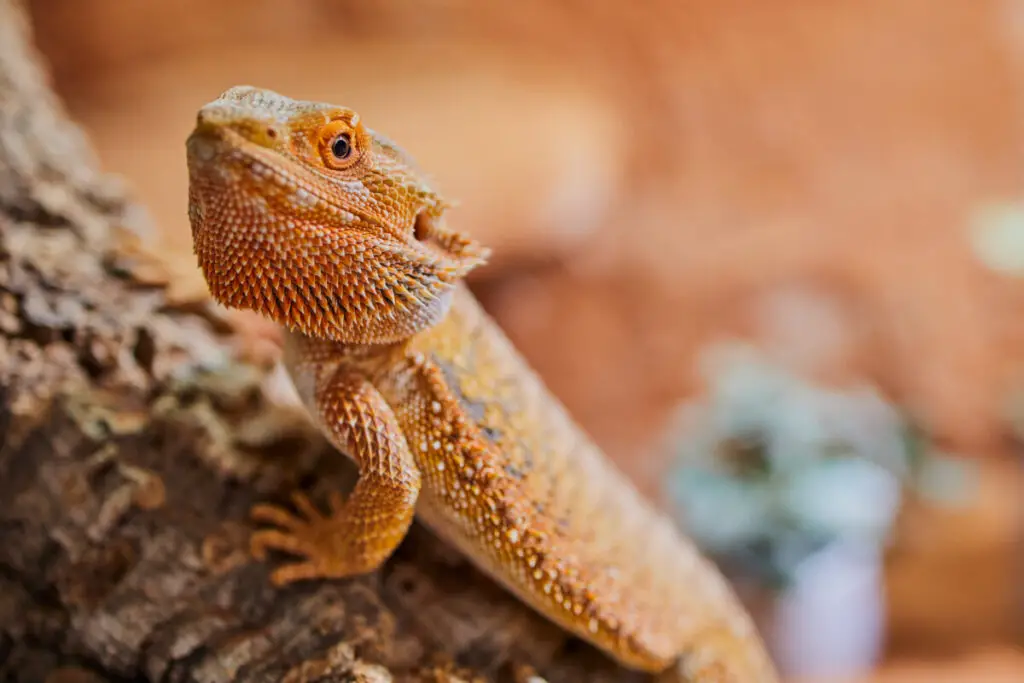
Different bearded dragons like to sleep on different materials depending on their personalities. In the wild, these pets sleep while hiding from predators.
They exercise the same habits in captivity, with some preferring to sleep in parts that appear hidden.
Hideouts, tunnels, burrowing, or digging in substrates are some of the hidden places bearded dragons like to sleep on.
In addition, some bearded dragons like to sleep on basking rocks and bearded dragon beds such as hammocks.
Whichever unit you choose, ensure that it is safe, stable, easy to clean, and affordable. Such qualities make a bed suitable for our beardie and our pocket too.
Further, ensure that you frequently wash the bearded dragon’s sleeping materials to maintain optimal hygiene in their enclosure.
Are Bearded Dragons Heavy Sleepers?
Bearded dragons sleep for between 8 and 12 hours a night. These reptiles are also deep sleepers, and their quality of sleep is affected by temperatures and light. They are heavy sleepers because they are active during the day, and their bodies need to recover in readiness for the next day. As bearded dragon owners, Its important to let your pet have a deep sleep to recover.
Frequently Asked Questions
How Long Do Bearded Dragons Sleep?
At night, bearded dragons sleep for between 8 and 12 hours, depending on the pet’s age, habits, level of activity, and light and temperature conditions. A sick bearded dragon might also sleep for longer as its body needs more rest time to enable it to recover.
During the day, bearded dragons do not sleep for long. Their naps are short, but if your bearded dragon sleeps all day, there might be a health problem, or the habitat conditions might not be correct.
Do Bearded Dragons Dream?
It is not clear if these reptiles get dreams. They have a shorter sleep cycle than mammals and birds, who are known to dream. It is also not clear whether other lizards also dream.
Do Bearded Dragons Sleep All Night?
Bearded dragons sleep at night. However, they might sleep all night or wake up before morning and then sleep again. When the beardie is startled, it will wake up even at night but fall asleep if the cage is dark enough and the temperature is correct.
If you realize that your bearded dragon is not sleeping at night, contact a professional because this is not normal. It indicates that there is an underlying problem such as stress or illness.
Conclusion
Sleep is vital to bearded dragons as it is to humans. It allows their bodies to heal, grow, develop and rejuvenate. It is also a good time for the body to relax after the day’s activities.
Bearded dragons sleep for an average of 12 hours a night. In addition, some nap during the day, and you might see them yawning upon waking up.
Monitor your beardie to understand its sleep pattern. Doing this will help you know when something is not okay with the pet, such as when it is ill, about to brumate, or injured.
We hope this will help you better understand your bearded dragon’s sleep patterns and provide the right conditions and accessories to support its quality of sleep for an optimal life.